
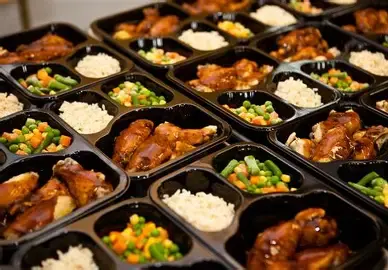
If you operate a meal prep business in Florida, or advise one, you might assume the sales tax treatment is straightforward. Food is being prepared and delivered to customers, so it must be taxable… right?
In many cases, that is exactly how the Florida Department of Revenue starts its analysis.
Under the Department’s published guidance, food or drinks prepared, served, or sold by restaurants, caterers, or similar establishments are generally taxable, with only limited exceptions.
But like many areas of Florida sales tax, what seems simple on the surface quickly becomes more nuanced. Depending on how the business is structured, the exact same meal could be either fully taxable or completely exempt. The difference often comes down to a handful of operational details that most businesses are not thinking about until they are already in an audit.
So where is the line?
The Key Issue: Catering vs. Food Products
At first glance, meal prep services look a lot like catering. Food is being prepared and delivered, sometimes on a recurring basis. And under Florida law, businesses operating as restaurants or similar establishments are generally required to collect tax on their sales of meals and prepared food.
However, Florida law also provides an important carveout. Food products for human consumption may be exempt when they are not sold for immediate consumption and are not being sold in a manner consistent with a restaurant or similar establishment.
Catering typically involves food that is ready to eat immediately and often includes some level of service, such as setup, serving, or on-site assistance. By contrast, exempt food sales generally involve food that is prepared, packaged, and sold for later consumption.
That distinction drives the entire analysis.
How Florida Draws the Line
Florida Statutes §212.08(1) provides an exemption for food products for human consumption. However, that exemption does not apply to:
- Food sold for immediate consumption
- Food sold by restaurants or similar establishments
This is consistent with the Department’s guidance, which treats meals prepared and sold by restaurant-type businesses as taxable unless a specific exemption applies.
Because of this, the issue usually comes down to two related questions:
- Is the food being sold for immediate consumption?
- Is the business operating like a restaurant or similar establishment?
If the answer to either leans toward “yes,” the transaction is likely taxable.
Meal Prep Services: Why They Are Sometimes Not Taxable
The Florida Department of Revenue has addressed meal prep businesses multiple times through Technical Assistance Advisements. These rulings show that meal prep services can fall outside the restaurant model, but only when the facts clearly support that distinction.
Across multiple rulings, the Department has focused on a consistent set of factors. The meals are prepared in advance, cooled or refrigerated, and packaged for later use. They are delivered cold, often with ice packs, and require reheating by the customer. The business does not provide utensils, napkins, or any type of dining service, and there is no opportunity for on-site consumption.
When those facts are present, the Department has concluded that the meals are not sold for immediate consumption and that the business is not operating as a traditional restaurant with respect to those sales.
Under those circumstances, the meals may qualify as exempt food products.
This position is reflected in several Technical Assistance Advisements. In TAA 16A-017, the Department concluded that weekly meal plan services were exempt where meals required refrigeration and were intended to be reheated later.
In TAA 19A-017, meals delivered in refrigerated packaging with gel packs and reheated by customers were also treated as exempt food products.
In TAA 20A-001, even where the taxpayer operated both a restaurant and a separate meal prep operation, the Department still found the meal prep portion exempt because the meals were prepared separately, sold cold, and not intended for immediate consumption, with separate accounting maintained.
Importantly, these rulings are highly fact-specific and reflect situations where the taxpayer was able to clearly distinguish its meal prep operations from a traditional restaurant model.
A Real World Example: Consider a typical meal prep company. Customers order meals online for the week. The meals are prepared ahead of time, packaged, and refrigerated. At the beginning of the week, the meals are delivered in insulated bags with ice packs, and the customer reheats them throughout the week.
In that scenario, the meals are not being sold for immediate consumption, and the business is not operating like a traditional restaurant with respect to those sales. Under current guidance, those sales are generally treated as exempt food products.
Now consider how easily that result can change. If the same company begins delivering meals hot and ready to eat, includes utensils and napkins, or encourages immediate consumption, the Department may view those same transactions as taxable prepared food or catering.
At that point, the business begins to look much more like the type of establishment described in the Department’s guidance, where meals are prepared and sold for immediate consumption.
The business may feel the same operationally, but the tax result can be completely different.
What This Means in Practice
For businesses in this space, the takeaway is simple but critical. Selling pre-packaged, refrigerated meals for later consumption may fall within the exemption. However, that outcome depends on maintaining clear separation from restaurant-type activities.
Even small operational changes can shift the analysis.
Where Businesses Get Into Trouble
Many businesses start out structured correctly, but over time begin to drift into taxable territory. This often happens when businesses:
- Begin offering hot delivery options
- Include utensils or other service elements
- Add a pickup location where meals can be consumed immediately
- Blend meal prep operations with restaurant activities
Individually, these changes may seem minor. From the Department’s perspective, they may indicate that the business is operating as a restaurant or similar establishment, making the sales taxable.
What Happens If You Have Been Doing It Wrong
This is where the real risk comes in.
If the Department determines that your business should have been collecting sales tax, the exposure can add up quickly. A typical assessment may include:
- Back taxes for three years or more
- Penalties that often range from ten percent to fifty percent
- Interest accruing from the original due date
During an audit, the Department will typically review sales records, bank deposits, and other financial data. If those numbers do not align with your sales tax filings, or if the Department believes the sales were taxable, it will often assume that all sales are taxable unless you can prove otherwise.
That burden of proof is critical. Without clear documentation and a properly structured business model, it can be very difficult to defend the exemption after the fact.
Structuring the Business Correctly
The good news is that these issues are largely avoidable with proper planning. Businesses that want to preserve the exemption should ensure their operations consistently reflect sales of food for later consumption and avoid characteristics associated with restaurant-type businesses.
At a high level, that means:
- Delivering meals cold rather than hot
- Requiring the customer to reheat the meals
- Avoiding utensils, napkins, or service elements
- Keeping separate accounting if multiple business models exist
- Maintaining packaging consistent with take-home food products
Why This Matters
Florida sales tax audits can be aggressive, particularly where a business falls within an industry that is presumptively taxable, such as restaurants and catering.
As a result, businesses operating in gray areas like meal prep services need to be especially careful in how they structure and document their operations.
Bottom Line: Meal prep services are not automatically exempt in Florida. In fact, the Department’s starting point is often that prepared food sold by restaurant-type businesses is taxable.
However, when a business can clearly demonstrate that it is selling food products for later consumption and is not operating as a restaurant or similar establishment, those sales may qualify for exemption.
The distinction is highly fact-specific. Temperature, timing, packaging, and the level of service all matter. Small changes in any of these areas can lead to a completely different tax result.
 About the Author: Michele Larrinaga is an associate attorney who joined the Law Offices of Moffa, Sutton, & Donnini, P.A. in 2025. As she begins her legal career with the firm, her work is anticipated to involve Florida state and local tax matters, particularly in the area of sales and use tax, including assisting with sales tax controversies from the administrative protest stage through litigation. Michele joined the firm after spending five years as a Tax Manager in the Tax Controversy group at a leading accounting firm based in New York, NY. During that time, she worked on federal tax controversy matters, assisting clients through audits, appeals, and administrative proceedings.
About the Firm: At the Law Office of Moffa, Sutton, & Donnini, PA, our primary practice area is Florida taxes, with a very heavy emphasis in Florida sales and use tax. We have defended Florida businesses against the Florida Department of Revenue since 1991 and have over 100 years of cumulative sales tax experience within our firm. Our partners are both CPAs/Accountants and Attorneys, so we understand both the accounting side of the situation as well as the legal side. We even have former sales tax auditors on staff. We represent taxpayers and business owners from the entire state of Florida. Contact us for a FREE INITIAL CONSULTATION to confidentially discuss how we can help put this nightmare behind you.
REFERENCES
Florida Department of Revenue, Sales and Use Tax on Restaurants and Catering, GT-800035 (R. 10/09)
Section 212.05, Florida Statutes
Section 212.08(1), Florida Statutes
Rule 12A-1.011, Florida Administrative Code (Food and Drink for Human Consumption)
Rule 12A-1.0115, Florida Administrative Code (Sales of Food or Drinks Served, Cooked, Prepared, or Sold by Restaurants or Other Like Places of Business)
Technical Assistance Advisement, TAA 16A-017 (Nov. 7, 2016)
Technical Assistance Advisement, TAA 19A-017 (July 17, 2019)
Technical Assistance Advisement, TAA 20A-001 (Feb. 12, 2020)
ADDITIONAL RESOURCES
FLORIDA SALES TAX AUDITS PROCESS AND TRAPS, published March 4, 2023, by David Brennan, Esq.
FL SALES TAX AUDITS – AUDITING YOURSELF BEFORE A STATE DOES, published October 23, 2023, by Matthew Parker, Esq.
FLORIDA SALES TAX ARREST – Palm Beach Pizzeria Owner – Published Mar 4, 2026, by James Sutton, CPA, Esq.
Florida – Restaurant Sales and Use Tax Audits, published November 6, 2020, by James Sutton, CPA, Esq.
RESTAURANT FLORIDA SALES TAX HANDBOOK, published January 4, 2018, by James Sutton, CPA, Esq.
© Copyright 2026 all rights reserved.