
[2].2605261234488.png)
If you own a Florida business and you have recently discovered — or long suspected — that your company has not been handling sales tax correctly, you are facing a decision that will have significant financial consequences either way. You can wait and hope the Florida Department of Revenue (FL DOR) does not find you. Or you can take control of the situation now, before the FL DOR makes the first move, and resolve your liability on terms that are far more favorable than anything an audit would produce.
That legal vehicle is called the Florida Voluntary Disclosure Program, and for qualifying businesses, it is one of the most powerful and underutilized tools in Florida tax law — and the window to use it closes permanently the moment the Department contacts you. At Moffa, Sutton, & Donnini, PA, we file multiple Florida sales tax voluntary disclosures a month on behalf of businesses just like yours. We know the players. We know the streamlined approach to getting your sales tax problems cleaned up in the FL DOR’s system like you have been doing it right all along. And, you are most likely going to avoid a sales tax audit for a few years afterwards for doing so. Having trouble sleeping at night about sales tax problems? – this is your solution.
HOW FLORIDA BUSINESSES END UP WITH SALES TAX PROBLEMS
Sales tax compliance errors are far more common than most business owners realize, and they arise in virtually every industry. Florida's sales tax laws are genuinely complicated, and well-intentioned business owners frequently make errors that accumulate over years before anyone recognizes the problem.
A restaurant owner may not realize that delivery companies were not remitting sales tax on your behalf, or that the rules for catering jobs are no different from in-house dining. A contractor may have been purchasing materials from out-of-state vendors without paying Florida use tax on those purchases. A retailer who expanded into e-commerce may have nexus with a state without knowing it, resulting in years of uncollected and unremitted tax. An interior designer may have been treating the entire invoice as a non-taxable service when the furniture and fixtures sold to your client make your design fees taxable too. A cabinet or counter top company may have been installed products without ever realizing that sales tax is due on the manufacturing labor.
In every one of these situations, the issue is the same: a gap between what the business has been doing and what Florida law requires. That gap represents a liability that is growing with every passing month, accruing interest at the current statutory rate of 11%, and sitting in the FL DOR's crosshairs whenever the agency's data-matching programs look in your direction.
The FL DOR does not wait passively for audit requests. The Department mines IRS Form 1099-K payment data, cross-references industry benchmarks, reviews business registration records, and follows tips and referrals. When something in the data looks off, an audit notice goes out. Once it does, the most favorable option for resolving the underlying problem is gone. You MUST file an application for the Florida Voluntary Disclosure program BEFORE the Department of Revenue reaches out to your company.
WHAT IS THE FLORIDA VOLUNTARY DISCLOSURE PROGRAM?
The Florida Voluntary Disclosure Program is an administrative program run by the FL DOR that allows businesses and individuals with unreported or underreported tax liabilities to come forward, pay what they owe, and resolve their exposure — before the Department contacts them. The program covers sales and use tax, as well as virtually every other tax administered by the FL DOR, including corporate income tax, documentary stamp tax, communications services tax, and reemployment tax.
For a Florida business with a sales tax problem, the program offers four critically important benefits that simply are not available once an audit has begun.
Penalty waiver. Florida's standard audit penalties can reach 10% to 200% of the tax assessed, depending on the circumstances. A business that willfully collected sales tax and failed to remit it faces the most severe penalty exposure. Under the Voluntary Disclosure Program, penalties are generally waived entirely — with one exception. If you collected sales tax from customers but failed to send it to the state, a 5% penalty is supposed to be imposed. Even then, 5% is far better than the 50% penalty that could otherwise apply.
Limited look-back period. This is perhaps the single most powerful feature of the Voluntary Disclosure Program. In a standard audit, the FL DOR can look back at least three years for a company that has been filing sales tax returns. But they can look back 5 years for a criminal investigation (collected but not remitted tax) or the look back to the beginning of your business if there are unfiled sales tax returns. A business that has been operating with a sales tax problem for ten years without filing a sales tax return has ten years of potential exposure. Under the Voluntary Disclosure Program, the FL DOR is statutorily required to limit the look-back period to three years from the date the disclosure is filed. For a business with a long history of non-compliance, this limitation alone can mean the difference between a manageable resolution and a catastrophic assessment that threatens the viability of the business itself.
Statutory presumption of no criminal intent. For shop owners who collected sales tax from customers but kept the money rather than remitting it to the state — a situation that can be treated as criminal under Florida law — filing a voluntary disclosure creates a statutory presumption that there was no intent to defraud the state. This is not a minor technicality. Florida takes criminal sales tax violations seriously, and the FL DOR's Criminal Investigations section actively pursues business owners who collect and do not remit. Voluntary disclosure takes that threat off the table.
Protection from sales tax audits. There is an unwritten rule in the Florida Department of Revenue that if you get selected for a sales tax audit and they can see you did a voluntary disclosure in the last 2 years, they will usually deselect you without you ever knowing you were about to be targeted. There is no law that prevents them from auditing you after a Voluntary Disclosure, but the logic goes that it would be a waste of resources to audit a company that just got their sales tax problems cleaned up. Since our firm started in 1991, we’ve only had one single client get audited within two years of doing a voluntary disclosure. That speaks volumes.
WHO QUALIFIES FOR THE FLORIDA VOLUNTARY DISCLOSURE PROGRAM?
The eligibility rules are straightforward, but they require careful attention.
The most critical requirement is that the taxpayer must not have been previously contacted by the FL DOR regarding the specific liability and specific periods being disclosed. "Contacted" means receiving a notice of intent to audit, a nexus questionnaire, a demand for unfiled returns, or any other formal communication from the Department regarding the liability at issue. If you have already received any of these, the standard voluntary disclosure program is not available, though other resolution options may be.
Having previously been audited for a different period does not automatically disqualify you — as long as the prior audit did not cover the period you are now disclosing. Both registered and unregistered taxpayers can participate. A business that never registered for a Florida sales tax account and has never filed a return can use the program just as readily as a business that has been filing returns but underreporting taxable sales.
The disclosure must be initiated before the FL DOR contacts the taxpayer for the period in question. This means timing is everything. If you know you have a problem and you are waiting to see what happens, you are gambling with the most valuable benefit the program offers: the ability to control when and how your liability comes to light.
HOW THE VOLUNTARY DISCLOSURE PROCESS WORKS
The program is initiated by submitting a written disclosure request to the FL DOR's Voluntary Disclosure Unit. The request identifies the tax type being disclosed, the period covered, and the taxpayer's contact information. If there is a question whether your company qualifies for the voluntary disclosure program, then we can approach the FL DOR’s voluntary disclosure team to ask if they are willing to accept you into the program, giving them enough details to comfortably make the decision.
Determining which transactions were taxable, which exemptions applied, and what records are available to support those determinations is work that should be done carefully and correctly before amounts are proposed to the FL DOR. Presenting the liability accurately from the outset leads to a cleaner resolution; discovering errors after the agreement is signed creates complications that can be difficult to unwind.
The entire process, from initial filing to final resolution, typically takes 45 to 60 days, although it can be expedited if circumstances warrant it. Businesses that want to move quickly can often accelerate the timeline by having their records and liability calculations ready before the disclosure is filed. Also, if you need time to pay the liability, then we can request a payment plan (with interest, of course).
WHY A FLORIDA SALES TAX ATTORNEY MATTERS IN THIS PROCESS
Some business owners, upon learning about the Voluntary Disclosure Program, are tempted to handle the disclosure themselves or ask their general CPA to manage the process. This is understandable — the program is designed to be accessible — but it carries real risks that are worth understanding before deciding how to proceed.
The liability calculation is the first challenge. The FL DOR expects a reasonable and well-supported estimate of the tax owed for the disclosure period. Determining which transactions were taxable, which exemptions applied, what records exist to support the calculation, and how to present the liability fairly requires both accounting precision and a deep understanding of Florida's sales tax rules. Overstating the liability leaves money on the table. Understating it creates problems when the FL DOR reviews the submission.
The scope of the disclosure is the second challenge. The program covers specific tax types and specific periods. The decisions about what to include, what periods to cover, and how to frame the disclosure have consequences that extend well beyond the immediate resolution, affecting the business's ongoing compliance profile and future audit exposure. An attorney who handles voluntary disclosures regularly understands how to structure the submission to protect the client fully while satisfying the FL DOR's requirements.
At the Law Offices of Moffa, Sutton & Donnini, P.A., shareholder James H. Sutton, Jr., CPA, Esq. has guided Florida businesses through the Voluntary Disclosure Program across virtually every industry for more than two decades — restaurants, contractors, retailers, manufacturers, technology companies, health care providers, professional service firms, and many others. The firm's dual CPA and attorney credentials are particularly relevant in this context. The liability calculation requires accounting expertise; the negotiation, the agreement, and the protection of the client's legal interests require a licensed attorney. Having both in the same representation is an advantage that general practitioners simply cannot replicate.
THE WINDOW IS OPEN — BUT IT WON'T STAY OPEN FOREVER
If you are reading this article because you know your business has a Florida sales tax problem, the most important thing to understand is that the Voluntary Disclosure Program is available to you right now — but it will not be available the moment the FL DOR makes contact.
The FL DOR is not passive. The Department actively matches payment data, monitors business registrations, cross-references industry benchmarks, and flags businesses with apparent compliance gaps. For businesses in high-audit industries, the question is often not whether the Department will eventually find the problem, but when.
The Voluntary Disclosure Program allows you to resolve that problem proactively — with penalty waiver, a capped three-year look-back period, and criminal protection — all on terms negotiated before the Department has any leverage over you. Once the audit notice arrives, every one of those advantages disappears.
Every month a business waits is another month of liability accruing at 11% annual interest, another month of penalty exposure building, and another month closer to an audit notice arriving without warning.
THE BOTTOM LINE
Florida's sales tax laws are complex, and the compliance gaps they create are common across virtually every industry. Going through an audit is both time consuming and expensive to a business and with years of unreported liability, the costs can can be severe — often existentially so. The Voluntary Disclosure Program exists precisely for this situation: to give businesses a structured, legally protected path to come into compliance before the problem becomes a crisis.
For Florida businesses with a sales tax problem they have not yet been contacted about, voluntary disclosure is almost always the right answer. The only question is whether to act now, while the program is still available, or to wait and find out the hard way what an audit costs by comparison.
If you believe your business has a Florida sales tax exposure, the right time to call a Florida sales tax attorney is today.
ABOUT THE AUTHOR
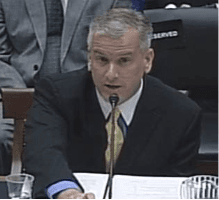 James H. Sutton, Jr., CPA, Esq. is a shareholder and named partner at the Law Offices of Moffa, Sutton & Donnini, P.A., one of Florida's preeminent state and local tax law firms, with offices in Fort Lauderdale, Tampa, and Tallahassee. Mr. Sutton holds dual credentials as a Certified Public Accountant and a Florida-licensed attorney, and his practice is devoted exclusively to Florida sales and use tax controversy — representing businesses from the initial audit notice through protest, litigation, and criminal defense before the Florida Department of Revenue. He has guided Florida businesses through the Voluntary Disclosure Program for more than two decades across virtually every industry in the state. Mr. Sutton teaches Florida sales and use tax to CPAs, attorneys, enrolled agents, and law school students, and is a prolific contributor to the Florida Tax Law Blog at FloridaSalesTax.com. He can be reached at 813-775-2131 JamesSutton@FloridaSalesTax.com or through the contact form at www.FloridaSalesTax.com.
The information in this article is for general informational purposes only and does not constitute legal advice. Reading this article does not create an attorney-client relationship.
ADDITIONAL RESOURCES
The following articles from FloridaSalesTax.com provide further guidance on the Florida Voluntary Disclosure Program and related sales tax compliance topics:
- HELP! – FLORIDA SALES TAX AUDIT — Published January 26, 2026, by James H. Sutton, CPA, Esq. A comprehensive guide to what businesses should expect from the moment an FL DOR audit notice arrives, including what records the Department requests and the most costly mistakes businesses make without qualified representation.
- FLORIDA SALES TAX ATTORNEY NEAR ME — Published January 27, 2026, by James H. Sutton, CPA, Esq. Explains why specialization in Florida sales tax matters far more than proximity when choosing representation for an audit or voluntary disclosure, and why a generalist is rarely the right choice.
- FLORIDA SALES TAX PROTEST LAWYER — Published January 14, 2026, by James H. Sutton, CPA, Esq. Covers the formal protest process available to businesses that did not use voluntary disclosure and are now contesting an audit assessment — the harder, more expensive path voluntary disclosure is designed to avoid.
- FILING FLORIDA SALES TAX RETURNS LATE — Published August 2024. Covers the penalty and interest consequences of late or unfiled sales tax returns and explains how the Voluntary Disclosure Program can be used to address late filing exposure with significantly reduced cost.
- FLORIDA SALES TAX AUDIT HELP — Published January 8, 2025, by James H. Sutton, CPA, Esq. Detailed guidance on what the FL DOR requests at audit, how the opening conference works, and why oversharing records is one of the most damaging early mistakes a business can make.
- DON'T HIRE AN IRS ATTORNEY FOR SALES TAX PROBLEMS! — Published July 17, 2024, by James H. Sutton, CPA, Esq. Explains the critical distinction between federal income tax representation and Florida sales tax defense, and why the skill sets required for each are not interchangeable.
- FL SALES TAX AUDITS – AUDITING YOURSELF BEFORE THE STATE DOES — Published October 23, 2023, by Matthew Parker, Esq. Explains how businesses can proactively evaluate their own sales tax compliance posture and identify problems before the FL DOR does — an essential step before deciding whether voluntary disclosure is the right path
WATCH DAVID BRENNAN'S VIOD ON THE FLORIDA VOLUNTARY DISCLOSURE PROGRAM
© 2026 copyright. James H Sutton, Jr, All rights reserved.