

If you are a Florida business owner who just received a Notice of Intent to Make Audit Changes or a Notice of Proposed Assessment (NOPA) from the Florida Department of Revenue (DOR) following a sales tax audit, take a deep breath — just because the audit is over, the ability to challenge the audit is not. You still have rights. You still have remedies. But you have a limited window of time to use them. My name is James Sutton. I’m both a CPA and an Attorney. I have spent most of my career helping Florida business owners navigate exactly this situation, and in this article I am going to walk you through, step by step, what a protest is, why it matters, and how to do it right.
Before we get into the specifics, I want to say that you are not crazy. You are right that the audit process was not fair and, unfortunately, it’s designed that way. The auditor’s job was never to help you get to the right amount you owed. The auditor’s job, how they were trained, is to throw as many things as possible against the wall to see what sticks. Then the burden shifts to you to prove them wrong. You are very effectively “guilty until proven innocent,” which is about as unamerican as it gets. Then they throw in ridiculously high interest rates (currently 11%) as well as 25% to 50% penalties to make the whole process even more threatening. They don’t care this this business is your livelihood. They don’t care that the high tax assessment could put you out of business. They live for high tax assessments then rush to end the audit so they can move on to do it to the next business.
Step 1: Understand What You Just Received
When a Florida sales tax audit is almost over, the auditor issues a Form DR-1215, Notice of Intent to Make Audit Changes. This is the auditor's preliminary position, with all the details on what they think you owe tax on and why. But, it is not a final assessment yet. You still have an opportunity to informally negotiate with the auditor (usually with the auditor’s supervisor) before the proposed assessment is formally issued. Do not skip that window. If you are comfortable doing this yourself, then request a meeting with the auditor and their supervisor and challenge every line item you believe is wrong. It is also a good time to bring in someone that really practices in this area of law that knows what positions you are taking are strong and which ones are weak. Learn how best to argue your position from someone that does nothing but this type of work every day. Sometimes we can resolve cases at this stage. In fact, I got hired last week on a case with over an $800,000 draft tax assessment. It took one phone call with the audit supervisor followed by one email to someone much higher up in the Department of Revenue to get most of the tax assessment removed. It’s not usually that easy, but that particular case has a glaring error in the auditor’s logic that I was able to bring some clarity to the situation to get the issue resolved quickly. I live for days like this one.
In a majority of cases, there are things that are not able to be resolved at the DR-1215 stage. Perhaps the auditor and their supervisor simply don’t want to spend the time and effort to resolve the case. In many cases, the issue is something they are told not to resolve at the audit level (how are you supposed to know this?!?) Either way, once those informal negotiations conclude (or if the auditor declines to listen), you will receive a Notice of Proposed Assessment (NOPA) in the mail directly from Tallahassee. This is when the auditor no longer has anything to do with the tax assessment and the formal starting gun has sounded. The clock is now ticking.
Step 2: Know Your Deadlines — They Are Absolute
This is the most critical thing I will tell you in this entire article: the deadlines listed in your Florida sales tax Notice of Proposed Assessment are hard and unforgiving. Miss them and you most likely lose your rights.
You have 60 calendar days from the date of issuance on the NOPA to file an informal written protest. That is not 60 business days. That is 60 calendar days — weekends and holidays count. The protest must be received by the Department by that deadline. Do not wait until the end and I don’t recommend relying on the US Mail to make sure your protest gets to the Department of Revenue timely. I recommend fax or email followed by “snail mail” but with tracking so you can both prove you mailed it and that they received it. The address for mailing the protest can be found in the Notice of Proposed Assessment along with your hard deadlines.
You can request a thirty day extension of time to file the protest, which they will usually grant once as long as you make the request in written before the 60 day mark. Failure to timely request an extension forfeits your right to informal protest proceedings.
Key statutory authority: Section 72.011, Florida Statutes governs the timing and rights related to contesting tax assessments in Florida. Section 213.21, Florida Statutes governs the DOR's authority to settle and compromise assessments.
If you miss the 60-day informal protest deadline, you still have an additional 60 days from the date the NOPA becomes final to file a formal challenge in Circuit Court or as a Chapter 120 petition in the Division of Administrative Hearings (DOAH) under Section 72.011, Fla. Stat. I will discuss which of these two routes I recommend after the discussion below on information protests.
Step 3: What Must Be in the Informal Written Protest
The informal written protest is not a form — it is a legal document you prepare and submit to the DOR's Office of Technical Assistance. A proper protest must include the following:
- Taxpayer identification information — Your business name, taxpayer identification number, audit number, and contact information.
- The tax type and the amounts protested — Specify the tax, interest, and penalty amounts you are challenging.
- A list of the specific items disputed — Go line by line through the audit workpapers and identify every item you believe is incorrect.
- A statement of facts — Explain the factual background that supports your position on each disputed item.
- A legal argument — Cite the statutes, rules, and case law that support your position. This is not optional. A protest that lacks legal citations is a weak protest.
- A copy of the NOPA — Attach it to your protest submission.
The protest can be submitted by U.S. mail, fax, or email to the DOR's Office of Informal Dispute Resolution (IDR). I strongly recommend sending it by fax (with a confirmation receipt) or email as well as by US mail with tracking to eliminate any dispute over timeliness.
When drafting your arguments, remember that the fact you didn’t know the law or you didn’t actually collect the tax (when you were supposed to) are not viable defenses. Just because your CPA or the prior business owner told you to do it that way is not a defense that holds water either. Even if you did everything exactly right but you can’t prove it, then you may have a very steep up hill battle. You really need to know the heart of the law about what is taxable, what is exempt, and what it takes to prove it to be effective. I’ve been doing this a very long time and I can tell you that my first initial phone call with business owners can usually ferret out what is viable to win and what is not in 10 minutes or less. At my law firm, we literally have over 1,000 active challenges against the Florida Department of Revenue at any point in time. Chances are that I not only have represented many businesses in your industry but I have also seen your exact scenario before. It usually only takes me a few questions to get to the heart of the matter and put together a viable strategy or, in a worst case scenario, to let you know the auditor actually was right. I’m not the type of attorney that will give you false hope. If I think you have an unwinnable case, I will tell you right then and there. It’s not an answer I like to give, but I sleep very well as night knowing I’m not one of those attorneys that drum up false hope to make legal fees.
Step 4: Digging Into the Audit Workpapers
Before you can write an effective protest, you need to understand precisely how the auditor arrived at the proposed assessment. One of the first things we do when we are hired to represent a company is request the complete audit workpapers, including the auditors internal notes. The DOR is required to provide them, but only if you ask the right Department (IDR) and only after the NOPA has been issued.
Once you have the audit work papers, look carefully at how the auditor computed the tax. Florida sales tax audits frequently use sampling methodology — the auditor picks a representative period, audits that period in detail, and then extrapolates the results across all open audit periods (typically three years under Section 95.091, Fla. Stat.). If the sample period was not representative, the extrapolation is flawed. Challenge it. In fact, for our clients that we represent during the audit, we never formally agree to the sampling method chosen by the auditors. This leaves our clients with the option to always challenge the sampling method.
Common issues worth contesting include:
- Exempt sales incorrectly included — If you sell items that are exempt under Section 212.08, Fla. Stat. (e.g., prescription drugs, certain food items, resale transactions, out of state shipments, etc), verify that you provided the required exemption paperwork and that the auditor excluded them properly.
- Resale certificate issues — If you sold items for resale and the auditor disallowed your exemption certificates, you may be able to obtain retroactive certificates from customers (even though auditors will very often falsely tell you his won’t work).
- Credits for tax already paid — Did you pay use tax or tax to another state on some of the assessed items? You may be entitled to credits.
- Sample period manipulation — If the auditor used a sample period that was atypically high in taxable transactions compared to your normal business operations (say, a holiday spike or a one-time large event), argue for a different or broader sample period.
- Penalty abatement — Under Section 213.21(3), Fla. Stat., the DOR has authority to waive or reduce penalties if there was reasonable cause for the taxpayer's failure to comply. If you acted in good faith based on advice of counsel or a prior DOR ruling, make that argument, which can work for penalties but not tax.
Step 5: The Oral Conference
Once you timely file your protest, you have the right to request an oral conference with the DOR's technical assistance staff. I strongly recommend doing so. This is your opportunity to present your case, submit additional documentation, and begin the negotiation process. We never pass up this opportunity for our clients.
The conference is held informally — no court reporter, no transcript. This actually works in your favor, because it allows for frank, productive discussion. The DOR reviewer who handles your protest is not the auditor. They approach the case with somewhat fresh eyes. Bring organized documentation. Be professional and factual. Emotion does not help. Evidence does, proper evidence.
After the conference and any further submission of evidence, the DOR will issue a Notice of Decision (NOD). You have the right to a 2nd informal challenge called a Petion for Reconsideration, which must be filled 30 days from the date of the NOD. You must make new arguments or present new facts for a Petition for Reconsideration to be considered. You should know that your Petition for Reconsideration will almost always end up on the same conferee’s plate that handled your Protest. You’ll go through another information conference before a Notice of Reconsideration (NOR) is issued. If the protest is partially or fully denied, the assessment becomes final as of the date of the NOD or NOR, and you then have additional rights to challenge the matter further in Circuit Court or a Chapter 120 hearing.
Step 6: What Comes After the Informal Protest
If the DOR's Notice of Reconsideration does not fully resolve the dispute in your favor, you have several options under Section 72.011, Fla. Stat.:
Option A — Circuit Court Litigation. You can file suit in Florida circuit court to contest the assessment. This requires prepayment of the FULL assessed tax, penalties, and interest into the court registry (or posting a bond if the court approves). I will tell you that very few Florida sales tax cases are handled by the Circuit Court simply because (a) it requires full payment and (b) it tends to be much more expensive. The Circuit Court route requires attorneys. It is immediately formal litigation, with depositions, court hearings, and many, many hours of attorneys fees. Only the biggest cases go this route and, for huge taxpayers, the court almost always allows the taxpayer to file a bond in leu of paying the tax into the court.
Option B — Division of Administrative Hearings (DOAH). You can request a formal administrative hearing before a DOAH administrative law judge under Chapter 120, Fla. Stat. In my opinion, the Chapter 120 route is by far the best route for most business owners. I say this after over 15 years of personally overseeing thousands of sales tax cases. Why do you ask? The first reason that is usually the most persuasive for small businesses, you only have to pay in the amount of tax you are not contesting. So, if the auditor says you owe $200,000 of tax, but you have a legitimate position that you only owe $20,000 of that tax, then you only have to pay in $20,000 to the FL DOR when you file the Chapter 120 petition. That is a big difference for most business owners. The 2nd reason, and the strongest reason from my point of view, is that the case isn’t actually filed with the court. A Chapter 120 petition is filed with the Department of Revenue’s general counsel office, who then decides whether the case is worthy for court or whether they want to settle the case without a trial. Here’s the secrete about Chapter 120 petitions. The FL DOR settled more than 98% of the Chapter 120 petitions filed without ever forwarding the case to the court system. That is a huge percentage. And, they reason I think this is so important is that settlement negotiations a must less costly in attorney fees that starting a formal trial. Must less. Even starting a formal Circuit Court case that settles before trial could easily cost $25,000 to $50,000 in legal fees. A Chapter 120 settlement negotiation could be a fraction of that cost.
So – question for you as a business owner. Do you appreciate your perspective attorney discussing how to lower your legal fees before you even speak with them? I am a business owner too. I distain having to pay legals fees. So, I work from day one on how to most cost effectively help my client because that is the type of attorney I would want representing me. Other attorneys are all gun ho about going to trial. Some cases require an expensive trial, but the vast majority do not.
Step 7: One Final Suggestion —At Least Take Advantage of a Free Initial Consultation
I have seen what happens when business owners try to handle a Florida sales tax protest without qualified representation. The DOR is not your friend in this process. Their auditors are trained to identify taxable transactions and their protest reviewers know the law. You need someone in your corner who knows it equally well — and specifically knows Florida sales tax law, not just federal tax law or general business law. You are a smart business owner. You feel confident in your position. You are able to represent your own company through the protest process. But look at the size of the tax assessment and tell me that you don’t want to at least bounce your case off someone that handles these kinds of cases all day, every day. My advice – take advantage of my free initial consultation to pick my brain. It can do nothing but make you better informed and, who knows, you might even decide you’d like me and my team in your corner.
This is a highly specialized area. Hiring a general practice attorney or even an IRS tax attorney to handle a Florida sales tax protest is like hiring a cardiologist to perform orthopedic surgery. The stakes are too high.
About the Author
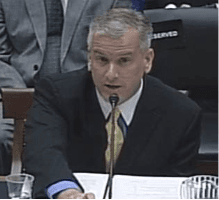 James H. Sutton, Jr., CPA, Esq. is a Florida-licensed Certified Public Accountant (since 1994) and a licensed member of the Florida Bar (since 1998). He is a Shareholder at Moffa, Sutton & Donnini, P.A., where he practices almost exclusively in the area of Florida sales and use tax controversy. Mr. Sutton handles sales tax audits, informal written protests, formal litigation, criminal defense, license revocations, collections, and consulting engagements — all in the Florida sales tax arena.
Mr. Sutton has over 30 years of experience in state and local tax, including work at Arthur Andersen and consulting engagements for Fortune 1,000 companies. He served as an Adjunct Professor of Law at Stetson University College of Law for over 20 years, teaching State and Local Taxation, and also taught at Boston University's LLM in Taxation program. He was the State and Local Tax Chairman of the American Academy of Attorney-CPAs (AAA-CPA), the State Tax Chairman for the FICPA, and the State and Local Tax Chairman for the Tax Council for Florida TaxWatch. Mr. Sutton has been quoted in the Bloomberg BNA Daily Tax Report, Tampa Bay Business Journal, Fox News Tampa Bay, and Law360. His focus for the last 15 years has been as a shareholder in the law firm Moffa, Sutton, & Donnini, PA with an almost exclusive Florida sales tax controversy representing Florida business owners.
You can reach James directly at 813-775-2131 or at JamesSutton@FloridaSalesTax.com. Learn more at www.FloridaSalesTax.com.
The Law Offices of Moffa, Sutton & Donnini, P.A. offers a FREE INITIAL CONSULTATION.
More Articles by James Sutton on FloridaSalesTax.com
- FLORIDA SALES TAX PROTEST LAWYER Published January 14, 2026 | By James Sutton, CPA, Esq.
- FLORIDA SALES TAX ATTORNEY NEAR ME Published January 27, 2026 | By James Sutton, CPA, Esq.
- FLORIDA SALES TAX AUDIT DEFENSE Published June 2025 | By James Sutton, CPA, Esq.
- HOW TO FIGHT A FLORIDA SALES TAX AUDIT Published September 8, 2024 | By James Sutton, CPA, Esq. & Jackie Mustian, Esq.
- DON'T HIRE AN IRS ATTORNEY FOR SALES TAX PROBLEMS! Published July 17, 2024 | By James Sutton, CPA, Esq.
- FLORIDA SALES TAX – IS LABOR TAXABLE? Published August 4, 2025 | By James Sutton, CPA, Esq.
- FLORIDA SALES TAX: ARE TARIFFS TAXABLE? Published May 24, 2025 | By James Sutton, CPA, Esq.
- FLORIDA SALES TAX – TRANSFEREE LIABILITY Published June 2025 | By James Sutton, CPA, Esq.
- FLORIDA SALES TAX INFORMAL WRITTEN PROTEST Published November 17, 2018 | By James Sutton, CPA, Esq.
- 2025 HILLSBOROUGH COUNTY SURTAX 1% SUSPENDED JANUARY 1ST Published December 28, 2025 | By James Sutton, CPA, Esq.
- FLORIDA SALES TAX AUDIT: CONSTRUCTION CONTRACTORS Published November 8, 2025 | By James Sutton, CPA, Esq.
- 2023 FLORIDA SALES TAX RATE ON COMMERCIAL RENT Published January 23, 2023 | By James Sutton, CPA, Esq.
© Copyright 2026 James H. Sutton, Jr. All rights reserved.