
.2607110652286.png)
Florida Sales Tax: Public Works Contracts Guide: What Construction Companies and Their CPAs Need to Know Including the New University Refund Law
Government construction projects trip up contractors more than almost any other corner of Florida sales tax law — including a materials-sale workaround that never actually holds up on audit. Here is how the rules fit together, and what changes for state universities and colleges on July 1, 2026.
James H. Sutton, Jr., CPA, Esq.
Law Offices of Moffa, Sutton & Donnini, P.A. — Tampa, Fort Lauderdale, Tallahassee
813-775-2131 | JamesSutton@FloridaSalesTax.com | FloridaSalesTax.com
Synopsis: On a real property contract, the contractor — not the customer — is the taxable purchaser of materials. Public works contracts make that rule harsher, and one common workaround, selling materials to the government and installing them under a separate contract, does not fix it. This article covers the default public works rule under Rule 12A-1.094, F.A.C.; why the materials-sale workaround fails; the Certificate of Entitlement direct-purchase procedure that actually works; and a new refund mechanism, effective July 1, 2026, exclusively for state university and Florida College System projects under section 212.08(6)(e), Florida Statutes.
I. The Rule Every Contractor Learns the Hard Way: You Are the Consumer
A contractor who builds, alters, or repairs real property is not making a sale of tangible personal property to the customer. The contractor is the final consumer of the materials it buys and owes sales or use tax on its own cost at the time of purchase. The customer pays nothing in sales tax on the contract price, and the contractor does not collect sales tax — but the contractor's own vendor material invoices are taxable regardless of how the contract is priced or itemized.
This is the foundational distinction in Rule 12A-1.051, F.A.C., between a real property contract and the sale-and-installation of tangible personal property that remains personal property. Misclassify a job at the bidding stage, and the error surfaces years later as an assessment with penalty and interest.
The Florida legislature provided some relief to real property improvement projects for government buildings in what is commonly known as “public works projects.” Governmental entities can buy construction materials tax exempt — they carry their own exemption, and Florida law lets that exemption reach a construction project under the right circumstances. That possibility is exactly what tempts contractors to assume the government's tax-exempt status flows through to the job automatically. It does not, and that gap is where the sales tax audits begin.
II. Public Works Contracts: A Harsher Set of Rules
Contracts with governmental entities layer additional rules on top of the general real-property framework, found in Rule 12A-1.094, F.A.C., “Public Works Contracts.” The rule governs any contract where a contractor supplies and installs tangible personal property that becomes part of a public facility — cities, counties, school boards, state agencies, universities, and Florida College System institutions alike.
The Department applies the ultimate-consumer principle more aggressively here than on private jobs. Items that would remain tangible personal property in a commercial contract — window blinds are the Department's own example — become real property improvements once installed under a public works contract. Mobile classroom trailers and freestanding equipment bolted into a facility can be swept in the same way. The practical effect: more of the project's cost ends up taxed at the contractor's purchase price, unless the public works contract rules are followed exactly.
The contractor and its subcontractors, not the governmental owner, are the taxable purchasers, and they owe use tax on the fabricated cost of anything they manufacture themselves, calculated under Rule 12A-1.043, F.A.C. Raw materials such as rock, shell, and fill dirt are treated the same way. None of this tax is recoverable by the governmental owner under the default rule — the gap the new university refund law in Part V is designed to close.
This is a heavily audited area: a misclassified public works job can mean six or seven figures of unpaid use tax on a multi-year build, and the rule applies automatically, with no election and no chance to fix the classification once materials are installed. That is also why the workaround discussed next keeps reappearing in bid packages despite consistently failing on audit.
III. The Contractor-as-Vendor Trap: Why “Selling Materials to the Government” Doesn't Work
A recurring (faulty) workaround: a subcontractor sells the construction materials directly to the governmental owner — invoiced to and paid by the government, using its exemption certificate — and then the same subcontractor enters a separate contract with the general contractor to installation those materials in the government’s building. The theory: a direct sale of goods to a tax-exempt buyer is exempt under section 212.08(6)(a), and a labor-only contract has no taxable materials component, so splitting the deal into two contracts should eliminate the tax. In isolation, that would work to exempt the materials from sales tax.
However, Rule 12A-1.094(2), F.A.C. forecloses that result directly: a public works contractor's purchase of materials is taxable to the contractor if the contractor also installs them, because the contractor — not the government — is the ultimate consumer. Whose name is on the installation contract is irrelevant if that same contractor sold the materials to the government. What matters is whether the party that acquired the materials is also the party that installed them; if so, the transaction collapses back into a single taxable contract no matter how the paperwork is split.
The Department's own advisements bear this out. In TAA 15A-013, a contractor purchased materials for a hospital renovation, invoiced the hospital, and was reimbursed directly — an arrangement that looked like a direct government purchase on paper. The Department still found the contractor, not the hospital, to be the true purchaser, because the deal never satisfied the direct-purchase-order, independent-vendor-invoice, and passage-of-title requirements described in Part IV. The label on the invoice did not change who actually acquired and installed the property.
The version that can work involves a selling vendor that is a separate legal entity from the entity installing the materials, sells the materials to the government. The separate, non-installing entity, needs to have its own purchase order, its own invoice to the government, its own payment from public funds, genuine passage of title and risk before the materials reach the job site — paired with a separate legal entity, installer. That is not a paper restructuring of one contractor's own procurement; it is the Certificate of Entitlement procedure done correctly, covered next.
IV. The Existing Escape Hatch: Direct Purchase and the Certificate of Entitlement
Section 212.08(6)(a), Florida Statutes, exempts sales made directly to a governmental entity when the government itself is the purchaser and pays the vendor directly. Rule 12A-1.094(4), F.A.C. lets a governmental owner capture that exemption on a public works project — but only if the substance of the transaction, not merely its paperwork, shows the government is truly the purchaser rather than the contractor.
The Department evaluates five factors, applied consistently across its Technical Assistance Advisements (TAA 14A-004, TAA 15A-013, TAA 17A-023, and TAA 18A-011): (1) the government must issue its own purchase order directly to the vendor; (2) the vendor must invoice the government directly, not the contractor; (3) the government must pay the vendor directly from public funds; (4) title must pass directly from vendor to government; and (5) the government must assume the risk of loss from delivery until installation.
When all five factors are satisfied, the contractor presents the owner's Certificate of Entitlement, paired with its Consumer's Certificate of Exemption, to each vendor, and the vendor sells the materials tax-exempt. Miss any one factor and the transaction reverts to a taxable purchase by the contractor. Because it must be documented purchase order by purchase order, it is rarely used cleanly across a large multi-vendor, multi-subcontractor project — a single missed direct-invoice, a subcontractor paying out of its own account, or a materials seller that is really the installer in disguise, as Part III describes, can unwind it.
V. What's New: A Refund for State Universities and Florida College System Institutions
Effective July 1, 2026, House Bill 7031E — Florida's omnibus 2026 tax bill, signed June 29, 2026 — added a new paragraph (e) to section 212.08(6), Florida Statutes, aimed at the administrative headache described above, but only for a defined universe of owners: state universities under section 1000.21(9), Florida Statutes, and Florida College System institutions under section 1000.21(5), Florida Statutes. That covers the twelve state universities and twenty-eight Florida College System institutions — not counties, municipalities, school boards, or other governmental purchasers, who remain under Parts II through IV above.
For this class of institutions, the new law takes a different approach than direct purchase: rather than structuring the transaction so tax is never paid — the approach that fails so often when contractors attempt it, per Part III — the tax is paid in the ordinary course, by the contractor, and then refunded to the institution afterward. That doesn’t mean the public works contractor rules no longer apply to university projects. It just means that if a contractor fails to properly exempt the material purchases on a university project under the public works rules, then the college or university may apply for a refund of taxes directly as a back up plan.
The statute is explicit that the exemption “inures to” the institution, not the contractor, and operates “only through a refund of previously paid taxes.” It is not a point-of-sale exemption. The contractor pays tax on materials exactly as it always has under Rule 12A-1.094, and the refund claim belongs to, and is filed by, the institution once materials are installed.
Note for readers: section 212.08(6)(e), F.S. is brand new and had not yet been posted to FloridaSalesTax.com's statute pages as of this writing, so it is cited by number only, without a link, above.
VI. How the Refund Mechanism Works, Step by Step
Under new section 212.08(6)(e)2., a state university or Florida College System institution must file a refund application with the Department quarterly. Each application must include:
- the name and address of the institution claiming the refund;
- identification of the specific public works project or projects;
- the name and address of each contractor who manufactured or purchased the tangible personal property installed;
- a copy of the institution's own sales tax exemption certificate; and
- the total refund requested, supported by copies of every invoice evidencing the purchase and tax paid.
The application must be filed under oath, affirming compliance and acknowledging the institution's liability for repayment if the refund is later determined improper. Once approved, the statute requires payment within thirty days. The Department may adopt emergency rules to implement the program, so a form and formal guidance should follow shortly after the effective date.
Notably absent: any mechanism for the contractor to file its own claim or recover tax directly. The invoices are the contractor's; the refund, and the thirty-day clock, belong entirely to the institution.
VII. What This Means for Contractors Bidding University and College Work
For contractors and CPAs in this space, the practical significance is less about the contractor's own tax posture — unchanged — and more about bid economics and documentation.
A university or college owner that understands this refund exists has real incentive to recover tax that, before July 1, 2026, was a sunk cost if the contractor and subcontractors did not follow the public works rules to exempt materials purchases in the first place. So, if university feels that their construction project didn’t take advantage of the public works rules at the start of a construction project, then the university (or their CPA) may start asking contractors to itemize materials costs and tax paid more precisely, purely to streamline its own quarterly applications. Contractors that can produce clean, invoice-level documentation without friction may find that an advantage in negotiations, even though the tax dollars flow back to the owner, not the contractor.
The statute puts institutions in the position of needing contractor and subcontractor invoices, organized by project, on a recurring quarterly basis for the life of the project. A contractor that cannot promptly produce that paperwork becomes a bottleneck for a repeat institutional client. New and existing university contracts should build in an affirmative obligation to furnish invoice copies on a schedule matching the Department's quarterly cycle.
What the new provision does not do: it does not extend to K-12 districts, counties, or municipalities, and it does not replace the Certificate of Entitlement procedure in Part IV, which remains available and, for many projects, may still be more efficient since it avoids the tax being collected and refunded at all.
VIII. Practical Compliance Steps
Contractors performing or bidding government work should keep a few principles in mind — with additional steps for state university and Florida College System work before July 1, 2026:
- Do not rely on a materials-sale-plus-labor-contract split. Per Part III, this avoids tax only if an independent third-party vendor — not the installing contractor — sells the materials directly to the government under a genuine direct-purchase arrangement.
- Confirm the owner is within scope for the new refund: a state university under section 1000.21(9), F.S., or a Florida College System institution under section 1000.21(5), F.S. — not a K-12 district, county, or other state agency.
- Preserve invoice-level detail, organized by project from the outset, since the institution's refund application must attach exactly that documentation.
- Build documentation timelines into contracts, matching the Department's quarterly filing cycle.
- Watch for the Department's emergency rules and application form, expected shortly after the effective date.
- Do not confuse this with a point-of-sale exemption.
IX. Conclusion
The default rule has not changed: the contractor remains the taxable consumer of the materials it installs. Splitting a project into a materials sale plus a labor contract does not change that unless a truly independent vendor sells the materials to the government — most attempts to shortcut that requirement fail on audit for the same reason the taxpayer failed in TAA 15A-013. What has changed, for a narrow slice of the market, is who can recover the tax on a properly classified project after the fact. Contractors and CPAs working on state university and Florida College System projects should treat the new quarterly refund process as a documentation obligation built into every contract — because a contractor that cannot produce clean invoices quickly is the reason an institutional client's refund gets delayed.
Frequently Asked Questions
Does a Florida contractor charge sales tax to a governmental customer on a public works contract?
Never. The contractor is treated as the ultimate consumer of the materials it installs and pays sales or use tax on its own purchase price. However, if the governmental purchases the materials directly from a vendor (other than the installing contractor), the public works rules allow sale tax to be exempted on the purchase of the materials.
Can a contractor avoid sales tax by selling materials to the government and installing them under a separate contract?
No, not if the same contractor is both the seller and the installer. Rule 12A-1.094(2), F.A.C. makes the purchase taxable to the contractor whenever it also installs the materials, regardless of the paperwork. The Department reached this result in TAA 15A-013, where a contractor invoiced a governmental hospital directly for materials but was still treated as the true purchaser.
What is the difference between the Certificate of Entitlement and the new university refund law?
The Certificate of Entitlement, under Rule 12A-1.094(4), F.A.C., lets a governmental owner buy materials tax-exempt at the point of sale by satisfying a five-factor direct-purchase test. The new refund under section 212.08(6)(e), F.S., provides that if the contractor paid sales tax on material purchases used in the university construction project, then the university or Florida College System institution can apply quarterly to have sales tax refunded afterward.
Which governmental owners qualify for the new sales tax refund on public works materials?
Only state universities under section 1000.21(9), F.S., and Florida College System institutions under section 1000.21(5), F.S. Counties, municipalities, and school boards do not qualify and remain subject to the general rules in Rule 12A-1.094, F.A.C..
When does the new state university sales tax refund law take effect?
Section 212.08(6)(e), Florida Statutes, created by House Bill 7031E and signed June 29, 2026, takes effect July 1, 2026.
Who files the refund application — the contractor or the university?
The college or university institution files the application, not the contractor. The contractor supplies the invoices documenting materials purchased and tax paid, which the institution attaches to its quarterly application for refund.
How long does the Department have to pay the refund once an application is approved?
Thirty days from formal approval of the institution's application.
About the Author
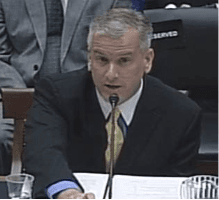 James H. Sutton, Jr., CPA, Esq. is a Shareholder at the Law Offices of Moffa, Sutton & Donnini, P.A., and a State and Local Tax (SALT) attorney concentrating almost exclusively in Florida sales and use tax controversy. He has been a licensed Certified Public Accountant since 1994 and a member of The Florida Bar since 1998. Since 2002, Mr. Sutton has served as an Adjunct Professor of Law at Stetson University College of Law, teaching State and Local Tax, and also teaches Sales and Use Tax at Boston University School of Law's LLM in Taxation program. If you have any questions, then Mr. Sutton has a FREE INITIAL CONSULTATION policy.
Direct phone: 813-775-2131 | Email: JamesSutton@FloridaSalesTax.com | Full bio: https://www.floridasalestax.com/staff-profiles/james-h-sutton-jr-cpa-esq-/
About the Firm
The Law Offices of Moffa, Sutton & Donnini, P.A. practices almost exclusively in the area of Florida state and local tax (SALT) controversy, with offices in Tampa, Fort Lauderdale, and Tallahassee, and over 200 years of combined experience among its attorneys.
Additional Resources
- Florida Sales Tax Audit: Construction Contractors (November 2025), by James H Sutton, Jr, CPA, Esq.
- Florida Sales Tax Handbook: Construction Contractors (October 2019), by James H Sutton, Jr, CPA, Esq.
- Florida Sales Tax on Public Works Contracts — A Trap for Contractors (January 2016), by James H Sutton, Jr, CPA, Esq.
© Copyright 2026. James H. Sutton, Jr. All rights reserved.