
.2607071509428.png)
Florida Sales Tax on Short-Term and Vacation Rentals: What Airbnb and VRBO Hosts Actually Owe
Why “The Platform Handles It” Is the Most Common — and Costly — Assumption in Florida Short-Term Rental Tax Compliance
James H. Sutton, Jr., CPA, Esq.
Law Offices of Moffa, Sutton & Donnini, P.A. — Tampa, Fort Lauderdale, Tallahassee
813-775-2131 | JamesSutton@FloridaSalesTax.com | www.FloridaSalesTax.com
Synopsis: Florida hosts more short-term rental activity than almost any other state in the country, and that volume has made vacation rentals one of the most audited categories for Florida sales and use tax as well as the local tourist taxes. Every stay of six months or less is subject to Florida's 6% transient rental tax, a county discretionary surtax, and a separate county type of Tourist Development Tax, and most owners assume Airbnb or VRBO simply takes care of all of it. That assumption is only half true, and the half that's wrong is the half that shows up in a very large tax assessment. This article walks through the three layers of tax that apply to a Florida short-term rental, who actually has to register and collect, exactly what Airbnb and VRBO do and do not collect on a host's behalf, and the recordkeeping traps that turn an otherwise compliant rental into an audit target.
I. Florida's Short-Term Rental Boom Meets a Three-Layer Tax System
Florida drew roughly 143 million visitors in 2024, and a growing share of them are staying in a condo, a beach house, or a spare room booked through Airbnb or VRBO rather than a hotel. That volume has not escaped the Department of Revenue's or the County taxing agency’s attention. Short-term rentals sit at an unusual intersection of state sales tax, county tourism tax, and — increasingly — third-party platforms that collect some, but rarely all, of what is owed. Understanding which layer applies, who is responsible for collecting it, and what the platforms actually do is the difference between a clean rental business and a multi-year assessment.
II. The Three Layers of Tax on Every Florida Transient Rental
A. State transient rental tax. Section 212.03, Florida Statutes, imposes a 6% state sales tax on the total rental charged for living quarters or sleeping accommodations rented for six months or less — hotels, condos, single-family homes, apartments, and mobile homes are all expressly covered. The tax applies to the full "total rental charged," which, under Rule 12A-1.061, F.A.C., includes any charge a guest is required to pay as a condition of the stay, not just the base nightly rate. That means cleaning fees ARE subject to tax.
B. County discretionary sales surtax. Most Florida counties add a discretionary sales surtax of 0.5% to 1.5% on top of the state rate, administered alongside the state tax on the same Form DR-15 return.
C. County Tourist Development Tax. Under section 125.0104, Florida Statutes, counties may separately levy a local option Tourist Development Tax — often called the TDT, the bed tax, or the resort tax — of 1% to 6% on the same transient rental charge. This is a distinct tax with its own registration and its own return, and some counties administer it themselves through the county tax collector while others delegate administration to the Department of Revenue, which is why Form DR-15TDT exists purely to tell taxpayers which arrangement applies in their county.
D. The Miami-Dade special case. Miami-Dade County separately imposes a Convention Development Tax under section 212.0305, F.S., and may impose a Local Option Food and Beverage Tax under section 212.0306, F.S. Layered on top of these, the cities of Miami Beach, Bal Harbour, and Surfside separately levy a Municipal Resort Tax of up to 4% on room rentals and up to 2% on food and beverage sales — authority that comes not from Chapter 212 but from a special act, Chapter 67-930, Laws of Florida. In parts of Miami-Dade, a single night's stay can carry four separate tax layers, pushing the combined rate north of 13%.
III. What Makes a Rental “Transient”? The Six-Month Rule
A rental is treated as transient — and taxable — any time the stay is six months or less. The exemption for longer stays is narrower than most owners assume: it requires a bona fide written lease for continuous residence longer than six months, signed before the tenant takes occupancy. A guest who simply stays month-to-month for seven months without that written lease in place does not retroactively become exempt; the Department's position, reflected throughout Rule 12A-1.061, F.A.C., is that the exemption is prospective only, running from the seventh month forward once six months of tax have actually been paid and the continuous residence is documented. Full-time postsecondary students and active-duty military personnel present under official orders are separately exempt under section 212.03(7), F.S., with their own documentation requirements.
IV. Registration: Who Actually Has to Register, and With Whom
The registration duty in Florida is broader than most first-time hosts expect. Every person who rents, leases, or grants a license to use a transient accommodation must register with the Department to collect, report, and remit tax, and — critically — the Department's own guidance extends that same duty to any person who receives rent or license fees on behalf of the owner, which sweeps in property managers, rental agents, and management companies collecting on an owner's behalf. A tenant who sublets or sub-leases a portion of their own rented accommodation is separately required to register as a dealer on that sublease, a rule that catches more short-term rental arbitrage operators than most of them realize.
Because the state transient rental tax and the county TDT are administered separately, a single property can require two distinct registrations: a state sales tax certificate (Form DR-11) for the 6% tax and surtax, and a separate county TDT account wherever the county self-administers rather than delegating to the Department. An agent or management company handling multiple properties for multiple owners can register those properties collectively using Form DR-1C, but each underlying property owner still receives their own registration number and remains ultimately liable for the tax.
V. The Airbnb vs. VRBO Trap
This is where most Florida short-term rental hosts get into trouble, because the two largest booking platforms handle Florida tax completely differently, and neither platform's dashboard makes that difference obvious.
Airbnb collects and remits the state's 6% transient rental tax and the county discretionary surtax on every Florida booking, in every county, as a matter of its own occupancy tax practice. For the county Tourist Development Tax, however, Airbnb only collects where it has negotiated a specific agreement with that county — roughly two dozen Florida counties as of this writing, plus the municipality of Surfside. Outside those counties, Airbnb collects nothing toward the local TDT, and the host remains fully responsible for registering, collecting, and remitting it.
VRBO, by contrast, does collect the state sales tax and the local discretionary surtax, but VBRO collects none of the local TDT rental taxes on the host's behalf in any Florida county. Every VRBO booking leaves the host responsible for the local TDT tax. A host who lists the same property on both platforms is, in effect, operating under two entirely different tax-collection realities on the same address.
It's worth understanding why this isn't governed by Florida's marketplace facilitator statute the way e-commerce sales are. Section 212.05965, F.S. — the law that requires platforms like Amazon and Etsy to collect tax on behalf of third-party sellers — defines a "marketplace" narrowly as a place where tangible personal property is offered for sale, and it expressly carves out any person who solely provides "travel agency services," a term the statute defines to include arranging or facilitating hotel or other lodging accommodations. Short-term rental platforms are not swept into that marketplace-provider framework the way online retailers are. Airbnb's collection of state tax is a matter of its own registration and business practice — and the Department's broader rule that any person who receives rent on behalf of an owner must register as a dealer — not an automatic statutory mandate applicable to lodging platforms generally. That is precisely why Airbnb and VRBO can land in such different places on the same underlying law.
In practice, I have seen more assessments arise from this platform gap than from any deliberate underreporting. A host sees "taxes collected" on an Airbnb or VRBO statement, assumes it covers everything, and simply never registers for the county TDT — right up until the county's short-term rental compliance software flags the listing and a multi-year assessment follows.
VI. Common Audit Traps for Short-Term Rental Owners
Cleaning fees, pet fees, and damage waivers. Rule 12A-1.061, F.A.C. defines the taxable "total rental charged" to include any charge a guest is required to pay as a condition of occupying the unit — meaning cleaning fees, mandatory pet fees, and required damage-waiver charges are part of the tax base, even when a host lists them as a separate line item at checkout.
The undocumented long-term exemption. Auditors routinely disallow the six-month exemption for hosts who can produce only a verbal understanding or a lease signed after the fact. Without a written lease executed before occupancy begins, the Department's default position is that the rental was transient from day one.
Multi-platform reconciliation gaps. Hosts who list on Airbnb, VRBO, and their own website simultaneously often lose track of which channel collected which tax, resulting in either double collection (which itself creates its own remittance problems) or, far more commonly, a silent gap on direct bookings and VRBO bookings that nobody ever registers to cover.
The "I only rent it a few weeks a year" owner. Individual owners who rent a vacation condo occasionally, rather than running a full-time rental business, frequently assume casual, low-volume activity falls outside Florida's tax net. It does not — a single transient rental transaction is enough to create a registration and collection obligation. You can wager that the county tax collectors are reviewing VBRO and AirBNB for listing that are not registered for TDT in their county.
Short-term rental arbitrage. Tenants who lease a unit long-term and then re-list it for short-term stays are themselves dealers on those sublet transactions, separate and apart from whatever obligation their landlord has (or doesn't have) on the underlying lease.
VII. Practical Guidance for Owners and Property Managers
Before listing a property anywhere, confirm — county by county — whether Airbnb or VRBO collects your county's Tourist Development Tax, since that list changes and is not the same for both platforms. Register separately for the state transient rental tax and, where required, the county TDT, even if a platform appears to be handling part of the obligation. Reduce every long-term exemption to a signed, dated written lease before the guest moves in, and retain it. Reconcile platform tax reports at least quarterly against actual bookings rather than assuming the numbers are complete, and if a gap turns up going back several periods, Florida's Voluntary Disclosure Program can resolve it with reduced look-back and penalty exposure before the county or the Department finds it first.
VIII. Conclusion
Florida's short-term rental tax structure is not complicated in concept — six months or less, and it's taxable, in three separate layers — but the platform landscape has made compliance far less intuitive than it should be. Airbnb quietly covers two of the three layers everywhere and the third almost nowhere; VRBO covers the state and local surtax, but none of the local TDT taxes. Hosts and property managers who understand that split, register in every jurisdiction that actually requires it, and paper their long-term exemptions properly rarely have anything to fear from an audit. Those who assume the platform "handles it" are the ones fielding a call from the county a few years later. If you manage short-term rental properties in Florida and want your registration and collection setup reviewed before it becomes an audit issue, my office would be glad to help.
Frequently Asked Questions
Do I have to charge sales tax on my Airbnb rental in Florida?
Yes. Any rental of a Florida living or sleeping accommodation for six months or less is a taxable transient rental under section 212.03, Florida Statutes, subject to the state's 6% sales tax, the county discretionary surtax, and the county Tourist Development Tax.
Does Airbnb collect and remit Florida sales tax for hosts?
Airbnb collects and remits Florida's state 6% transient rental tax and the county discretionary surtax on every Florida booking. It only collects the county Tourist Development Tax in counties where it has a specific agreement with that county — roughly two dozen counties as of this writing — so hosts outside those counties remain responsible for the TDT themselves.
Does VRBO collect Florida sales tax?
YES. VRBO does collect Florida's state transient rental tax and the county discretionary surtax, but not any county Tourist Development Tax on behalf of hosts, in any Florida county. The host is responsible for registering, collecting, and remitting all for the local TDT in all counties (that have a TDT).
What is the difference between Florida's transient rental tax and the county Tourist Development Tax?
Florida's transient rental tax is a statewide 6% sales tax under section 212.03, F.S., administered by the Department of Revenue. The Tourist Development Tax is a separate, county-level tax of 1% to 6% authorized under section 125.0104, F.S., with its own registration and return, administered either by the county tax collector or by the Department depending on the county.
Is a long-term rental exempt from Florida's transient rental tax?
Yes, but only with a bona fide written lease for continuous residence longer than six months, signed before the tenant takes occupancy. Without that written lease in place from the start, the Department treats the rental as taxable from day one, even if the guest ultimately stays for a longer period. Interestingly enough, a tenant with a written lease for more than six months that departs early is still exempt.
About the Author
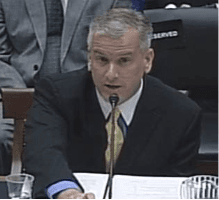 James H. Sutton, Jr., CPA, Esq. is State and Local Tax (SALT) attorney and CPA as well as a Shareholder at the Law Offices of Moffa, Sutton, & Donnini, P.A. Mr. Sutton has an almost exclusive focus on Florida sales and use tax controversy. Since 2002, Mr. Sutton has served as an Adjunct Professor of Law at Stetson University College of Law, teaching State and Local Tax, and he also teaches Sales and Use Tax at Boston University School of Law's LLM in Taxation program. Take advantage of my FREE INITIAL CONSULTATION.
Phone: 813-775-2131 | Email: JamesSutton@FloridaSalesTax.com | View Full Bio
About the Firm
The Law Offices of Moffa, Sutton, & Donnini, P.A. is a Florida law firm practicing almost exclusively in the area of Florida state and local tax (SALT) controversy, with offices in Tampa, Fort Lauderdale, and Tallahassee. The firm's attorneys have over 200 years of combined experience representing businesses in Florida sales and use tax audits, protests, and litigation against the Florida Department of Revenue, and regularly speak and write on Florida sales tax topics for CPAs, attorneys, and business owners across the state.
Additional Resources
Is Software as a Service (SaaS) Taxable in Florida?, July 2026, James H. Sutton, Jr., CPA, Esq.
Florida Sales Tax Exemptions for Manufacturers: The Machinery, Equipment, and Utility Breaks Every Florida Manufacturer Should Be Using, July 2, 2026, James H. Sutton, Jr., CPA, Esq.
Florida Sales Tax Criminal Investigations: When Sales Tax Experience Matters, June 24, 2026, James H. Sutton, Jr., CPA, Esq.
Florida Sales Tax Data Center Exemption under Section 212.08(5)(r), June 23, 2026, James H. Sutton, Jr., CPA, Esq.
Florida Sales Tax – Gold and Silver Coins Exemption Beginning July 1, 2026, June 2026, James H. Sutton, Jr., CPA, Esq.
Florida Reemployment Tax Audits in the Home Health Care Industry, June 2026, James H. Sutton, Jr., CPA, Esq.
Are Wedding Planning Fees Subject to Florida Sales Tax?, June 2026, James H. Sutton, Jr., CPA, Esq.
© Copyright 2026. James H Sutton, Jr. All rights reserved.