

Florida Sales Tax Criminal Investigations: When Sales Tax Experience Matters
By James H. Sutton, Jr., CPA, Esq.
Shareholder in Moffa, Sutton, & Donnini, PA
Most Florida business owners think of a sales tax problem as a civil matter — an audit, an assessment, a bill from the Department of Revenue. What they do not realize is that the Florida Department of Revenue (FDOR) has its own criminal investigations unit, and it is not shy about using it. A sales tax problem that starts as a routine audit can escalate into a felony prosecution, an arrest, and real prison time up to 30 years. I have seen it happen to business owners who thought they were simply behind on payments. Believing that an investigator is there to help you figure out what you owe is a very costly mistake I see often.
This article explains how Florida sales tax criminal investigations work, what triggers them, what the penalties look like, and — most importantly — what you need to do if you think one may be headed your way. It also explains why you want an attorney that knows more than a former prosecutor or public defender. You want someone that knows both the Florida Department of Revenue AND the criminal court system. The article is written by James H Sutton, Jr., CPA, Esq – an experienced State and Local Tax (SALT) attorney that has probably been hired to handle more sales tax criminal cases than any other attorney in Florida. Experience matters!
Florida Sales Tax Is State Money — Not Yours
The foundation of Florida's criminal sales tax law is deceptively simple: under section 212.15, Florida Statutes, sales tax collected from customers is legally declared to be the property of the State of Florida the moment you collect it. You are a trustee of those funds. You are holding them temporarily on behalf of the state until the next filing deadline. The moment you spend that money on anything other than remitting it to the state — payroll, rent, inventory, personal expenses — you have, in the eyes of Florida law, stolen state funds.
I also get that when you collect sales tax on January 1st, the money goes into your general bank account as there is no legal requirement to separate the funds. If your business is not profitable, then you will be spending more on rent, payroll, inventory, etc than you are bringing in from revenue. Unless you are putting money into your business from an outside source, you very likely will be dipping into those sales tax funds to pay general expenses without any intention of stealing the money. You simply have more expenses than revenue. If you don’t have any funds to pay January’s sales tax return by the due date, then you may not be able to pay 100% of the sales tax due with that return. Ladies and gentlemen, as much as no one wants to hear this, that is a textbook case for theft of state funds.
This framing is not rhetorical. It is the actual legal theory under which criminal prosecutions are brought. The charge is literally "theft of state funds" under section 212.15(2), F.S. That distinction matters enormously because it means the FDOR does not need to prove that you evaded tax on your own income. It only needs to prove that you collected sales tax from customers and failed to remit it timely — and that you did so intentionally. Unfortunately, that “intentionally” just means you knew you were supposed to and you didn’t.
How Florida Sales Tax Criminal Investigations Begin
Criminal investigations rarely appear out of nowhere. In most cases I have seen, there is a recognizable pathway from civil noncompliance to criminal exposure. Understanding that pathway is the first step in protecting yourself.
The Audit Referral
A trigger for a criminal investigation, although not as common as you might think, is an active civil audit in which the auditor suspects intentional wrongdoing. FDOR auditors are trained to look for indicators of fraud — dramatically inflated exempt sales, cash-heavy businesses with returns that do not match industry norms, records that appear altered, or books that simply do not reconcile. When an auditor believes the discrepancies are not mistakes but deliberate manipulation, the auditor can refer the case internally to the FDOR's Criminal Investigations Division (CID) — sometimes without the taxpayer ever knowing the referral has been made.
This is one of the most dangerous situations a business owner can face. You may still believe you are in a standard civil audit, answering questions cooperatively, providing records voluntarily, while an FDOR investigator is simultaneously building a criminal file against you. Anything you say during the audit process can be used against you in a subsequent criminal proceeding. In other cases, the transfer to a criminal investigation might be evidenced by the auditor simply ghosting you (not returning any phone calls or emails).
Filing Without Paying or Not Filing At All
A common pattern that triggers a criminal investigation is filing sales tax returns accurately but not paying the tax owed. When this happens month after month, the Florida Department of Revenue collections staff will initially make contact — letters, phone calls, and collection notices. But if the pattern continues, the file can be elevated to the criminal investigation unit. The FDOR's view is straightforward: if you reported the tax, you knew you owed it. Continuing to withhold it looks intentional. Keep in mind that the auditors and criminal investigators work out of the same offices around the state and often sit in cubicles right next to each other. They talk.
Six Consecutive Unfiled Returns
Under section 212.12(c), Florida Statutes, knowingly failing to file six consecutive sales tax returns is itself a felony of the third degree, punishable by up to five years in prison. This provision catches many business owners off guard. Maybe the company’s account stopped filing the returns. I commonly find business owners that thought that they just wouldn’t file because they couldn’t pay, which is compounding the problem as the Department will estimate your taxes to be much higher than your historical average – pushing your case higher up on the criminal investigation priority list. Oh, and not filing six returns in a row might result in your case going to the state attorney’s office for prosecution without every talking to you. Finding out about a criminal investigation by a sheriff showing up to arrest you at your home, work, or kids school is bad news for anyone.
Third-Party Reports and Data Matching
The FDOR does not rely solely on auditors to identify criminal targets. It also receives information from other state agencies and uses data cross-matching to identify discrepancies. The Department of Highway Safety and Motor Vehicles, for example, provides vehicle title and registration data that the FDOR compares against the sales tax returns filed by auto dealers. In fact, the Department of Revenue has log in access to DMV records and it doesn’t take much to compare used car dealers’ sales in the DMV per month to their sales tax returns for those months.
The IRS sends 1099-K data reflecting credit card and third-party payment processor receipts by month, which the FDOR compares against reported taxable sales for each of those months. Hotels, restaurants, convenience stores, retailers, and other high-volume cash businesses are particularly vulnerable to these data-matching investigations because their sales are largely trackable through credit card processors — meaning the FDOR can often identify underreporting without ever setting foot in your business.
The FDOR also accepts tips from the public. Under section 213.30, Florida Statutes, individuals who report tax violations and whose tips lead to the collection of taxes, penalties, and interest may be entitled to a financial reward. A disgruntled employee, a former business partner, or a competitor can initiate a criminal investigation against you by picking up the phone.
The Criminal Penalties Under Section 212.15, F.S.
The penalty structure for Florida sales tax crimes is graduated based on the total amount of unremitted tax. Critically, the FDOR is permitted to aggregate amounts across multiple tax periods to determine the degree of the offense — meaning small monthly shortfalls can add up to serious felony exposure over time.
Under section 212.15(2), Florida Statutes, the theft of state sales tax funds is punishable as follows:
- Less than $1,000: Second-degree misdemeanor (up to 60 days in jail). A second conviction elevates to a first-degree misdemeanor (up to one year in jail). A third or subsequent conviction is a third-degree felony.
- $1,000 to $19,999: Third-degree felony — up to five years in Florida State Prison.
- $20,000 to $99,999: Second-degree felony — up to fifteen years in Florida State Prison.
- $100,000 or more: First-degree felony — up to thirty years in Florida State Prison.
Beyond the theft of state funds theory, section 212.12, F.S., creates additional criminal exposure for filing false or fraudulent returns. A business owner who willfully files a fraudulent return to evade tax faces a separate 100% penalty on the unreported tax, in addition to criminal charges. Filing a fraudulent return to evade $100,000 or more in tax is a first-degree felony under that statute as well.
Criminal prosecution under section 212.15 must be commenced within five years of the date of the offense. I will tell you from experience that the DOR collectors pay attention to this five year statute of limitations. If the collector thinks you are not going to pay and part of your taxes owed are approaching the five years past due mark, then the collector can and do refer cases to criminal investigations as an unofficial, but very effective, collections tool. I mean, seriously, who isn’t going to pay back sales tax to avoid jail time?
The Role of the Dept of Revenue Criminal Investigations Division
The FL DOR's Criminal Investigations Division is not a group of accountants. CID investigators are sworn law enforcement officers with the authority to conduct surveillance, execute search warrants, seize business records, and make arrests. They are trained in financial crimes investigation, and they work closely with state attorneys' offices to build prosecutable cases. In my experience, sales tax investigators are either former Department of Revenue collectors, or they are former police offers. Personally, I like to work with former police offices more than former collectors as they can be more reasonable.
When the criminal investigations division opens an investigation, the business owner is typically the last to know. Investigators may interview employees, subpoena bank records, review credit card processor data, and coordinate with other agencies — all before making any direct contact. When they do make contact, it is often because they believe they already have enough evidence to refer the case for prosecution and are looking for a statement from the taxpayer to confirm their theory. But one thing is consistent about sales tax investigations – the investigator always shows up unannounced. They like to surprise you. Rattle you. Embaris you in front of other people. They want to catch you off guard so you will make admissions against your own interests. It really doesn’t take much to get you to admit you collected sales tax, you didn’t remit it timely, and you knew you were supposed to remit the tax. That is all it takes to admit to every element of the crime other than the dollar amount stolen.
Here is what I tell every client who has been contacted by a Florida sales tax investigator: do not say a single word other than “I want a sales tax attorney present for any conversation.” Not another word. A DOR investigator is not there to help you understand your options. She is there to gather evidence. Even a truthful, well-intentioned explanation of what happened can be twisted into an admission of the elements of theft of state funds. Your right to remain silent applies in every FL DOR criminal investigation, and you should exercise it immediately.
Your Accountant Cannot Protect You — But Your Attorney Can
One of the most important practical distinctions in a FL DOR criminal sales tax investigation is the difference between your accountant and your attorney. The accountant-client relationship carries no privilege in Florida criminal proceedings. Your accountant can be compelled to testify before a grand jury, to produce every work paper, every email, every memo about your tax situation. There is no legal protection for information you shared with your CPA or bookkeeper if it can be shown that the accountant knew or should have known about the sales tax crime. Trust me, your accountant does NOT want to be put in a position where they have to testify against a client.
The attorney-client privilege, by contrast, is absolute. Everything you tell your attorney in the context of seeking legal advice is protected. As I often say, “you can tell me who you shot yesterday and where you buried the body, and as an attorney, I am required to keep that confidential whether you hire me or not.” Moreover, when a sales tax attorney engages an accountant as part of the legal representation — through what is known as a Kovel arrangement or Kovell letter — that accountant's work product becomes protected under the attorney-client privilege as well. This is a critical planning tool for any business owner who suspects they may be under investigation. Engaging an attorney immediately, and having the attorney bring in accounting support under the umbrella of that privilege, may protect your financial information from compelled disclosure.
The Voluntary Disclosure Solution — Before It Is Too Late
If you have a sales tax problem but have not yet been contacted by a FL DOR sales tax investigator, the Florida Voluntary Disclosure Program may offer a path out of criminal exposure entirely. Under the VD, a taxpayer who voluntarily comes forward and discloses unremitted sales tax before an investigation has begun can generally resolve the liability with waived penalties and without criminal prosecution. The statute actually creates a presumption of no criminal intent for taxpayers who disclose voluntarily — meaning a timely voluntary disclosure can legally undercut the very foundation of a criminal case.
The window for voluntary disclosure closes the moment the FDOR opens an investigation. Once CID is involved, the VDP is no longer available. This is why timing is everything. If you suspect you have unreported or unremitted sales tax exposure, the time to act is now — before the FDOR comes to you.
Frequently Asked Questions
Can I go to jail for not paying Florida sales tax? Yes. Under section 212.15, Florida Statutes, failing to remit sales tax collected from customers — with intent to deprive the state of those funds — is a criminal offense ranging from a misdemeanor to a first-degree felony carrying up to thirty years in prison, depending on the amount involved.
How does the Florida Department of Revenue decide to pursue criminal charges instead of a civil audit? The FDOR's Criminal Investigations Division becomes involved when auditors or investigators believe the noncompliance is intentional rather than accidental. Common triggers include patterns of filing without paying, dramatic underreporting relative to industry norms, falsified records, or tips from third parties.
What is the most common Florida sales tax crime? Collecting sales tax from customers and failing to remit it to the state — "theft of state funds" under section 212.15(2), F.S. — is the most frequently prosecuted sales tax crime in Florida.
Can the FDOR aggregate multiple months of unpaid tax to make a felony case out of smaller amounts? Yes. The statute expressly permits aggregation of stolen amounts across periods. Monthly shortfalls of a few hundred dollars can accumulate into felony-level exposure over time.
What should I do if an Florid Department of Revenue investigator contacts me? Do not speak with the investigator. Politely decline to answer any questions, ask to have an attorney present, and immediately contact a Florida sales tax attorney. Anything you say can and will be used against you. Better yet, take advantage of my FREE INITIAL CONSULTATION.
Does my accountant have to testify against me in a FDOR criminal investigation? Maybe. The accountant-client relationship carries a very limited privilege in Florida criminal proceedings. Your accountant can be subpoenaed and compelled to testify and produce records if the state can show that the account knew or should have known a crime was being committed. Only communications with your attorney are fully protected.
Can I use the Voluntary Disclosure Program to avoid criminal prosecution? YES - If you come forward before the FDOR has contacted you, the Voluntary Disclosure Program can resolve your liability and create a statutory presumption against criminal intent. Once an the DOR contacts you about the period(s), that window to get into the VD program is closed.
What happens if I filed my sales tax returns but just didn't pay? Filing accurate returns but failing to pay is not a defense — in some ways, it makes the criminal case easier for prosecutors, because you have already admitted what you owed. Continued nonpayment after filing strongly suggests intentional withholding of state funds, but it does stop the DOR from generating high estimated liabilities OR charging you with the crime of failing to file six consecutive returns.
About the Author
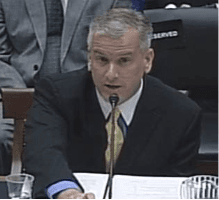 James H. Sutton, Jr., CPA, Esq. is a State and Local Tax (SALT) attorney, a Florida licensed CPA, and shareholder at the Law Offices of Moffa, Sutton & Donnini, P.A. James practices almost exclusively in Florida sales and use tax controversy. He represents businesses and individuals facing Florida Department of Revenue audits, criminal investigations, and litigation. More specifically, James has probably been hired to handle more criminal sales tax cases than any other attorney in the state of Florida. If experience is what you are looking for, then James can be reached directly at 813-775-2131 or JamesSutton@FloridaSalesTax.com. Learn more at his bio page. If you are facing a potential Florida sales tax fraud situation, then I suggest you take advantage of my FREE INITIAL CONSULTATION policy now.
About the Firm
The Law Offices of Moffa, Sutton & Donnini, P.A. is a Florida law firm that practices exclusively in Florida sales and use tax. Our attorneys are also CPAs, giving us a unique ability to understand both the accounting and legal dimensions of every case. We represent businesses and individuals statewide from our offices in Tampa, Fort Lauderdale, and Tallahassee. Call us today for a free initial consultation: 888-444-9568.
Additional Resources
- FLORIDA SALES TAX ARREST – PALM BEACH PIZZERIA OWNER – March 4, 2026, by James H Sutton, Jr, CPA, Esq.
- FLORIDA SALES TAX ARREST – RESTAURANT OWNER – January 16, 2025, by James H Sutton, Jr, CPA, Esq.
- "Do I Have to Charge Florida Sales Tax on a Wholesale Sale?" — June 7, 2026, James H. Sutton, Jr., CPA, Esq.
- "Can I Trust AI for Florida Sales Tax Advice?" — June 6, 2026, James H. Sutton, Jr., CPA, Esq.
- "Florida Sales Tax – Inadvertent Registration: What It Is and How It Can Save Your Business" — June 5, 2026, James Sutton, CPA, Esq.
- "Florida Sales Tax Voluntary Disclosure: The Best Way to Clean Up a Florida Sales Tax Problem" — May 26, 2026, James H. Sutton, Jr., CPA, Esq.
- "2021 Florida Economic Nexus Passed" — April 2021, James H. Sutton, Jr., CPA, Esq.
- "Florida Sales Tax on Online Purchases" — December 2019, David J. Brennan, Jr., Esq.
- "Florida Sales Tax for Remote Sellers" — November 2018, James H. Sutton, Jr., CPA, Esq.
© Copyright 2026. James H Sutton, Jr. All rights reserved.