
.2606060929019.png)
I have spent my career explaining Florida sales and use tax law to business owners, CPAs, and attorneys. I have watched clients walk into audits with confident, well-organized documentation of positions they were certain were correct — because they had done their research. What has changed in the past few years is where that "research" increasingly comes from. Today, a growing number of business owners and even some tax professionals are turning to artificial intelligence tools — ChatGPT, Google Gemini, Microsoft Copilot, Claude, and others — to answer Florida sales tax questions. Some are doing it as a starting point for deeper research. Others are doing it as a substitute for professional advice altogether.
This article is not an attack on technology. AI tools are remarkable instruments that have genuine value in many contexts. In fact, I used Claude AI to generate the first draft of this article. However, the scary fact is that the first draft of the article had about 5 rather serious errors that it would have taken someone with 10 plus years of experience in sales tax controversy to catch. In other words, you really can’t rely on AI to give you sound advice for Florida sales and use tax— at least not as a primary or standalone source of guidance. And the reason is not that AI is occasionally careless. The reason is structural: the way these tools are built makes them systematically unreliable for the kind of specific, current, jurisdiction-specific legal analysis that Florida sales tax compliance requires. When they get it wrong — and they do, regularly — the business owner does not get a polite correction. They get a six-figure audit assessment.
This article explains the specific mechanisms by which AI tools fail at Florida sales tax questions, provides concrete documented examples of AI errors in the tax context, and explains what business owners and their CPAs should do instead.
WHY AI AND FLORIDA SALES TAX ARE A DANGEROUS COMBINATION
Before getting to specific examples, it is worth understanding precisely why general-purpose AI tools are structurally ill-suited to providing reliable Florida sales tax guidance. There are four core reasons.
1. Knowledge cutoffs make AI advice stale by design.
Every large language model — the technology underlying ChatGPT, Gemini, Copilot, and similar tools — is trained on a dataset with a fixed endpoint. After that endpoint, the model knows nothing unless it is explicitly connected to a real-time information source. Florida sales tax law changes constantly. The legislature amends Chapter 212, Florida Statutes, in virtually every session. The Florida Department of Revenue issues Technical Assistance Advisements, Tax Information Publications, and administrative rule amendments on a rolling basis. County discretionary surtax rates change. Exemptions are enacted, expanded, narrowed, and eliminated.
An AI tool that was trained on data through, say, mid-2024 has no knowledge of any of these changes. It will answer questions about current Florida law based on what the law was when it was trained — and it will do so with complete confidence, with no indication that its answer may be months or years out of date. Many government web sites, where the most up to date tax laws are found, are often not accessible by AI engines. Read that again – the most advanced AI search engines out there often can’t even access the most current state tax laws and people are relying on AI for answers. As Bloomberg Tax has reported, by late 2025 alone, researchers had documented nearly 800 AI-related citation errors across at least 25 countries in tax and legal contexts, drawn from court records and disciplinary actions.
2. AI tools cannot distinguish between what they know and what they are guessing.
This is what the technology community calls "hallucination" — the AI generates an authoritative-sounding answer that is either partially or entirely fabricated. The term is almost too gentle. A hallucination in the context of Florida sales tax is not a quirky error. It is a false legal position stated with professional confidence, which a business owner may then rely on in making decisions about how to invoice customers, what to purchase tax-free, what positions to take on a sales tax return, and when a new tax law became effective.
The hallucination problem is particularly acute in state and local tax research, because the specificity required is extreme. A general question like "Is labor taxable in Florida?" might get a partially correct answer. But the moment you add facts — the type of business, the nature of the transaction, whether tangible personal property was transferred, whether a resale certificate was used — the AI is operating in territory where its training data may be thin, contradictory, or simply wrong, and it has no mechanism for knowing the difference.
3. AI treats all sources as equally authoritative.
A Florida sales tax attorney doing research knows which sources are authoritative: the Florida Statutes, the Florida Administrative Code, Technical Assistance Advisements, and formal Department of Revenue guidance. An AI tool making the same inquiry draws on everything in its training data — including blog posts, Reddit threads, news articles, outdated FL DOR publications, and guidance from other states that happens to use similar language to Florida's rules. The model has no reliable way to weight these sources by reliability, recency, or jurisdiction, but the AI answer sounds confident and authoritative. How are you to know when the information is wrong? The answer is that you don’t unless you have years of experience to know the answer.
4. AI cannot ask the follow-up questions that change the answer.
Every experienced Florida sales tax attorney knows that the answer to almost every sales tax question begins with "it depends." It depends on the type of transaction, the nature of the parties, what was transferred, how it was invoiced, what certificates were in place, what industry you are in, who is paying for the transaction, when were the goods delivered, where were the goods delivered, and what the business has done historically. An AI tool asked a simple question gives a simple answer. It does not know to ask the questions that would change that answer — and those are usually the most important questions.
REAL EXAMPLES: WHEN AI GETS FLORIDA SALES TAX WRONG
Example 1: The Commercial Rent Repeal — A Perfect Case Study in Stale AI Advice
For more than six decades, Florida was the only state in the country that imposed a sales tax on commercial real property leases. Under Section 212.031, Florida Statutes, landlords were required to collect sales tax from commercial tenants on rent, CAM charges, and other lease-related payments — and to remit those taxes to the Florida Department of Revenue.
Effective October 1, 2025, that tax was fully repealed by House Bill 7031. Both the state-level tax and all county discretionary surtaxes on commercial real property leases were eliminated. The repeal was a landmark change for Florida businesses, eliminating a tax burden that had cost commercial tenants billions of dollars annually.
Here is the problem: any AI tool trained before mid-2025 — which includes many of the most widely used tools — has no knowledge of this repeal. If a commercial tenant or their CPA asks an AI tool today whether their Florida office lease is subject to sales tax, a model with an outdated knowledge cutoff will say yes. It will cite Section 212.031. It may even tell the user the current tax rate. Every word of that response will be based on law that no longer exists.
A landlord relying on that advice continues collecting and remitting sales tax from tenants on post-October 2025 rental periods — creating a situation where the landlord is collecting money it has no legal basis to collect and remitting it to the Department of Revenue unnecessarily. A tenant relying on that advice continues paying sales tax that is no longer owed, with no one to catch the error. An attorney or CPA who cites AI-generated research on this point in advising a client faces potential professional liability.
I personally had experience in the last week of AI telling me that Florida’s commercial rent tax was repealed July 1, 2025. The fact is that most of the tax laws in 2025 became effective July 1, 2025, but the commercial rent tax repeal was effective October 1, 2025. I responded to the AI that it had the repeal date wrong. It very politely apologized. I’m not sure an apology is going to mean much to a CPA or attorney that gave the wrong information to a client because they didn’t know AI had the dates wrong. This is the big danger of using AI for tax research. Unless you already really know the area of law in question, you really can’t trust the answers.
This is not a hypothetical. It is precisely the kind of error that AI tools operating with stale training data make — and on a change as significant and recent as the commercial rent repeal, the risk is acute.
Example 2: Getting the Rate Wrong Before It Changes
Lest the commercial rent repeal seem like an isolated event, consider the documented case highlighted by Avalara in October 2025, in which a leading AI chatbot told a user that the combined sales tax rate in Bellevue, Washington, was 10.3% — when the correct rate for that moment was 10.2%. The discrepancy arose because King County had passed an ordinance in July 2025 to impose an additional 0.1% tax — but that tax did not become effective until January 1, 2026. The AI model could not distinguish between the date the ordinance was enacted and the date it became operative law. The AI applied the future rate to a present transaction.
The parallel to Florida is direct. Florida has numerous county discretionary surtax rates that change annually. A business charging the wrong combined rate — whether too high or too low — creates compliance problems: either the business is overtaxing customers (creating refund obligations and customer relations issues) or under taxing them (creating audit exposure for the uncollected amount). An AI tool that cannot reliably distinguish between enacted rates and effective dates is not a tool for Florida sales tax compliance.
Example 3: Labor Taxability — The Most Common Misunderstood Question
One of the most frequently Googled Florida sales tax questions is whether labor charges are subject to sales tax. The correct answer under Florida law is nuanced: labor is taxable when it is part of a transaction in which tangible personal property is transferred to the customer, and non-taxable only in rare circumstances where the transaction is a pure service with no transfer of tangible personal property whatsoever. This is on top of 4 specific services that are subject to sales tax as a service.
When tested on this question, general-purpose AI tools frequently get it wrong in the direction that is most costly for business owners. AI tools tend to state that labor is not taxable in Florida — which is the general rule in many states — without adequately conveying the significant and important exceptions under Florida law. A repair shop owner who asks an AI tool whether they need to charge sales tax on labor and gets a confident "no" has been given advice that will result in an audit assessment covering every under-taxed labor invoice for the past three years, plus interest and penalties.
Texas CPA magazine's January 2025 analysis of AI performance on state and local tax questions noted that when asking AI tools to research "complicated tax areas, such as state and local taxation," the tools "tended to provide hedged responses" that were "often wrong and/or misleading." The hedging — brief disclaimers suggesting the user "consult a professional" — does not appear until after the confident wrong answer has already been delivered and absorbed.
Example 4: Fabricated Citations — When AI Invents Authority That Does Not Exist
Perhaps the most dangerous AI failure mode in a legal context is not getting the law wrong — it is inventing legal authority that does not exist. In the now-widely-documented Mata v. Avianca case in the Southern District of New York in 2023, attorneys submitted a legal brief citing multiple court decisions that ChatGPT had generated as part of its research — none of which actually existed. The judge sanctioned the attorneys. The cases were entirely fabricated.
This problem is not limited to litigation. A January 2026 paper published in the International Tax Journal documented roughly 800 AI-related citation errors across court and disciplinary records in at least 25 countries. The paper specifically noted that AI hallucinations had produced fabricated citations, quotations, and facts "that appear plausible but are false."
In the Florida sales tax context, this means a business owner could receive AI-generated guidance that cites a Technical Assistance Advisement, a Department of Revenue rule, or a statutory provision — complete with a convincing citation number — that does not exist or does not say what the AI claims. The business owner follows the advice, relies on the citation in defending their position to an auditor, and discovers during the audit that the authority they were counting on was invented.
Example 5: Inadvertent Registration for Florida Sales Tax
In another example I noticed just this week was on an article I was working on for Florida Inadvertent Registration, which allows a taxpayer to retroactively register for sales tax when they made inventory purchases before registering for sales tax. The Inadvertent Registration process, if you qualify, allows the taxpayer to get a back dated resale certificate that would exempt the purchase from sales tax with a small penalty. This can be a huge secrete weapon for a company that jumps the gun buying inventory for a new company. When I asked Claude to write something on the topic, the AI answer was that the taxpayer would get out of most of the penalties, but they would still owe the full sales tax and interest on the purchase despite the retroactive registration. That answer was not only completely wrong, but it also completely missed the purpose of the Inadvertent Registration process entirely. The (wrong) answers were clear and unambiguous with statute and rules cites – none of which provided what AI claimed. Once again, if you didn’t know the topic backwards and forwards before asking the question, then you can’t rely on the AI answers to Florida sales tax questions.
Example 6: The Resale Certificate & Exempt Entity Traps
Florida's Annual Resale Certificate (Form DR-13) allows registered dealers to purchase goods tax-free when those goods will be resold. The rules governing when a resale certificate can be used, who can use it, and what happens when it is misused are specific and consequential — misuse can result in criminal and civil penalties under Florida law.
AI tools asked about resale certificates in Florida routinely miss critical elements of the Florida-specific framework: that the buyer must be a registered Florida dealer at the time of purchase (the inadvertent registration problem), that the certificate is issued annually and must be current, that a seller accepting a certificate from a buyer who is not registered may face liability, and that using a resale certificate to purchase goods that are then used rather than resold triggers a use tax obligation at the point of diversion.
Another example would be tax exempt entities are able to buy goods and services exempt from sales tax and the AI engines will quickly and confidently tell you so. But what AI doesn’t reveal to the unsuspecting business owner is that Florida law requires not only the exemption paperwork but also that payment come directly from the tax exempt entity. Payments made on an employee’s credit card do not qualify for the exemption, but AI fails to mention this very important detail. A business owner who gets a general answer about resale certificates or tax exempt entities from an AI tool — "you can buy tax-free with an exemption certificate" — without these details has received a legally incomplete answer that sets them up for audit exposure on every transaction where the details were not satisfied.
THE COMPOUNDING PROBLEM: CONFIDENT WRONGNESS
What makes AI errors in the Florida sales tax context particularly dangerous is not just that they occur — it is that they occur with extraordinary confidence. Unlike a CPA who will say "I'm not certain about this specific provision; let me research it," an AI tool delivers its answer in clear, professional prose, often structured as a bulleted summary of the relevant rules, complete with statutory references that may or may not be accurate.
CNBC's March 2026 reporting on the use of AI for tax advice quoted Jordan Wilson, founder of AI strategy company Everyday AI: "By default, large language models are trained to be helpful assistants. That means they're often going to sound very confident, and oftentimes you're going to run into hallucinations." The same article noted that ChatGPT told a tester conducting a tax review that a return was "a very simple return with one stock plan wrinkle" — a characterization that would cause any experienced tax professional to raise an eyebrow.
The confidence of AI output makes it harder, not easier, to detect errors. A business owner reading an AI response that cites "Section 212.05, Florida Statutes" and explains the taxability of labor in professional-sounding prose has no natural prompt to question the answer. They are getting what appears to be authoritative legal analysis. They proceed accordingly. And then they get audited.
WHAT BUSINESS OWNERS, CPAS, and ATTORNEYS SHOULD DO INSTEAD
None of this means that technology has no role in Florida sales tax compliance. Purpose-built tax compliance platforms — tools specifically designed, updated, and maintained for sales tax compliance — are a very different category from general-purpose AI chatbots. The distinction matters enormously.
But for the specific questions that drive audit exposure in Florida — whether a particular transaction is taxable, whether a specific exemption applies, how to structure contracts and invoices to minimize liability, how to respond to an audit notice — there is no substitute for An experience Florida sales tax attorney with current, specific, verified knowledge of Chapter 212 and the administrative framework around it.
For CPAs advising clients: be cautious about any client who arrives with AI-generated guidance on a Florida sales tax question. Verify every position against the current Florida Statutes, current administrative rules, and current Department of Revenue guidance. Better yet, pick up the phone and call me. I am glad to share off the cuff knowledge as free initial consultations. A wrong position taken in reliance on AI carries no legal protection. The business still owes the tax, the interest, and the penalties — and the CPA may owe the client for the advice.
For business owners: the cost of a free initial consultation with an experienced Florida sales tax attorney is … free. Why not bounce your question off me and I can usually clear up a question in five minutes or less. Florida sales tax is not always logical, especially to AI search engines. Let’s face it - experience matters! Use AI for what it does well — drafting communications, explaining general concepts, organizing your thinking. Do not use it as a substitute for professional analysis of a specific Florida sales tax question where the stakes are real.
THE BOTTOM LINE
Artificial intelligence tools are impressive. They are also wrong — specifically, confidently, and consequentially wrong — in the Florida sales tax context, for reasons that are structural and not going away. Knowledge cutoffs, hallucinations, jurisdictional confusion, and the inability to ask the right follow-up questions make them unreliable guides in an area of law where being wrong costs businesses real money.
The Florida Department of Revenue does not accept "I asked ChatGPT" as a defense to an audit assessment. It does not reduce interest or waive penalties because a business relied on an AI tool's confident but incorrect answer. The tax, the interest, and the penalties are assessed on the facts as they are, not as an AI described them.
The truth is that I use AI more and more these days. But every time I do, I find 5 to 10 glaring mistakes that it usually would take someone with 10+ years of dedicated sales tax experience to catch. Everyone needs to start learning to use AI, but none of us should trust the answers it gives for technical questions like Florida sales tax law. For Florida sales tax questions that matter, pick up the phone or email an experienced tax professional. When the answer matters, take advantage of my free initial consultation.
ABOUT THE AUTHOR
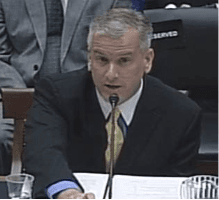 James H. Sutton, Jr., CPA, Esq. is a named shareholder at the Law Offices of Moffa, Sutton & Donnini, P.A., a Florida state and local tax law firm with offices in Fort Lauderdale, Tampa, and Tallahassee. Mr. Sutton holds dual credentials as a Certified Public Accountant and a Florida-licensed attorney, and his practice is devoted exclusively to Florida sales and use tax controversy. He has taught Florida sales and use tax to CPAs, attorneys, and law school students, and has represented businesses across all industries in audits, protests, voluntary disclosures, and litigation before the Florida Department of Revenue. If your business received a sales tax audit notice, you have questions about your compliance posture, or even worse, you have been relying on AI-generated guidance and want an experience Florida sales tax professional review of those positions, Mr. James Sutton can be reached at 813-775-2131 JamesSutton@FloridaSalesTax.com or through the contact form at www.FloridaSalesTax.com.
The information in this article is for general informational purposes only and does not constitute legal advice. No attorney-client relationship is formed by reading this article.
ADDITIONAL RESOURCES
The following articles from FloridaSalesTax.com provide current, attorney-verified guidance on the Florida sales tax topics most frequently mishandled by AI tools:
- FLORIDA SALES TAX VOLUNTARY DISCLOSURE: THE BEST WAY TO CLEAN UP A FLORIDA SALES TAX PROBLEM — Published May 26, 2026. If an AI-generated position has left your business with unreported or underreported sales tax, this article explains Florida's proactive compliance program — and why acting before an audit is always the better path.
- FLORIDA SALES TAX ATTORNEY – WHY IT IS IMPORTANT TO HIRE ONE — Published May 20, 2026. Explains the specific value that a Florida-credentialed, sales-tax-focused attorney provides in audit defense and compliance planning — and why general tax experience, AI tools, or IRS attorneys are not equivalent substitutes.
- HOW TO FIGHT A FLORIDA SALES TAX AUDIT — Published September 8, 2024, by James Sutton, CPA, Esq. and Jackie Mustian, Esq. A comprehensive audit defense guide — essential reading for any business that has received Form DR-840 and needs to understand what comes next.
- FLORIDA SALES TAX – IS LABOR TAXABLE? — Published October 4, 2025, by James Sutton, CPA, Esq. The definitive current treatment of one of the most frequently misunderstood — and most frequently wrong — areas in AI-generated Florida sales tax guidance.
- 2025 FL COMMERCIAL RENT SALES TAX RATE — Published December 28, 2024, by Jackie Mustian, Esq. Covers the transition rules and rate changes leading into the October 1, 2025 commercial rent repeal — the single most recent major change to Florida sales tax law that AI tools with stale training data will get wrong.
- FLORIDA SALES TAX AUDITS PROCESS AND TRAPS — Published March 4, 2023, by David Brennan, Esq. Covers the stages of an FL DOR audit, the records the auditor will request, and the most common traps businesses fall into — including relying on unverified guidance about what is and is not taxable.
- DON'T HIRE AN IRS ATTORNEY FOR SALES TAX PROBLEMS! — Published July 17, 2024, by James H. Sutton, Jr., CPA, Esq. Explains why Florida sales tax expertise is genuinely specialized — and why advisors without it (including AI tools) are not an adequate substitute for Florida-specific representation.
- FL SALES TAX NOTICE OF ASSESSMENT PERSONAL LIABILITY: WHAT IS IT AND WHAT TO DO! — Published August 9, 2023, by Matthew Parker, Esq. Covers the personal liability exposure that can flow from taking wrong tax positions — a reminder that the consequences of AI-generated errors do not stop at the business entity level.
- FILING FLORIDA SALES TAX RETURNS LATE — Published August 26, 2024, by Jackie Mustian, Esq. Covers interest and penalty exposure for late or incorrect returns — the financial stakes that make getting Florida sales tax right the first time so important.