

MIAMI SALES TAX CRIMINAL DEFENSE ATTORNEY: Investigators are NOT there to help you!
How Florida Sales Tax Investigations Start in Miami-Dade, Who Prosecutes Them, and What to Do Before the Eleventh Judicial Circuit Gets Involved
By: James H. Sutton, Jr., CPA, Esq.
Law Offices of Moffa, Sutton & Donnini, P.A. — Tampa, Fort Lauderdale, Tallahassee
813-775-2131 | JamesSutton@FloridaSalesTax.com | www.FloridaSalesTax.com
Synopsis: Our law firm has defended Florida business owners against the Department of Revenue since 1991, including a steady stream of Miami-Dade cases that started as a routine audit and ended up on a criminal investigator's desk. Miami-Dade is one of the busiest counties in Florida for sales tax enforcement, and the Department of Revenue's own Miami Taxpayer Service Center in Doral works closely with the Miami-Dade State Attorney's Office when a case crosses from civil to criminal. This article explains how these investigations typically start in Miami-Dade, the felony thresholds that determine how serious a case becomes, which industries in the county draw the most scrutiny, and what a business owner should do the moment a Department of Revenue investigator makes contact.
I. Why Miami-Dade Sales Tax Cases Escalate to Criminal
Florida sales tax is a trust fund tax — the moment a Miami-Dade business collects it from a customer, that money legally belongs to the State of Florida, not the business. Failing to remit it, even to cover payroll or rent during a rough month, is treated by Florida law as theft of state funds rather than an ordinary business debt. Miami-Dade's sheer transaction volume, its cash-heavy retail and hospitality sectors, and its concentration of high-dollar industries — auto sales, jewelry, import and export goods, and tourism-driven retail — make it one of the most active counties in the state for this kind of enforcement. A business owner that gets behind in sales tax because the business is not profitable is in just as much risk as the owner that intentionally under reports sales tax. The intention to pay the tax back does not affect the investigation.
II. How a Miami-Dade Sales Tax Investigation Typically Starts
The Department of Revenue's Miami Taxpayer Service Center, located at 3750 NW 87th Avenue, Suite 300, in Doral, handles civil audits and taxpayer services for Miami-Dade businesses. A criminal referral usually begins as a civil matter here — a routine audit, a limited scope inquiry, or a tip — before it is ever handed to the Department's Office of Criminal Investigations. By the time a Miami-Dade business owner receives a call, a letter, or a visit from an investigator identifying themselves as being with the criminal side of the Department, the Department has typically already reviewed bank records, point-of-sale data, or vendor reports and believes it has identified a pattern of collected-but-unremitted tax. WARNING: Your credit card processor is already reporting your credit card sales by month to the FL Department of Revenue, so any material discrepancy in how you file sales tax is going to get flagged.
Do not assume a phone call or a friendly conversation is off the record. Anything said to a Department of Revenue investigator can be used to support a criminal referral. In fact, most business owners find out they are being criminally investigated by an investigator showing up at their business unannounced, trying to catch the owner off guard. If you are contacted by anyone identifying themselves as a criminal investigator with the Department, or if a civil auditor's questions start sounding like they are building a criminal case rather than verifying a return, that is the moment to get experienced counsel involved — not after an arrest warrant has already been issued. Sales tax criminal investigations can be resolved, but they are minefields that are hard to escape unharmed.
III. The Felony Thresholds That Apply
Florida law scales the criminal exposure for collected-but-unremitted sales tax to the dollar amount involved, and Miami-Dade's discretionary sales surtax — currently 1%, for a combined 7% rate on most taxable sales in the county — factors directly into that dollar total:
- $301 to $20,000: third-degree felony, punishable by up to 5 years in prison.
- $20,000 to $100,000: second-degree felony, punishable by up to 15 years in prison.
- $100,000 or more: first-degree felony, punishable by up to 30 years in prison.
None of these thresholds require intent to permanently keep the money forever, and none of them care whether the funds went to a legitimate business expense. Once tax is collected from a customer and not remitted timely, the statute treats it as theft regardless of where the money actually went.
IV. What Not to Do During a Miami-Dade Criminal Sales Tax Investigation
Never speak with a Department of Revenue criminal investigator without counsel present. This is true everywhere in Florida, but it matters especially in Miami-Dade given how closely the Department's Doral service center and the Office of Criminal Investigations coordinate with local prosecutors. A business owner who tries to explain away a discrepancy directly to an investigator, without counsel, is often handing the state the exact admission it needs to support a felony charge. That investigator is NOT there to help you resolve the case.
The most common fact pattern I see for business owners that are arrested for sales tax fraud is that they (sometimes with their accountants or lawyers) cooperate fully with the investigator providing all books, records, and statements from the owners. The business owner and their tax professional get the impression that they investigator is there to help them figure out what the business owes so they can pay it back. Often the business owner is has the funds and is just waiting for a total. The investigator ends the meeting saying “I have everything I need. I will be in touch.” What the investigator means is they have everything they need to have the business owner charged with sales tax fraud. The investigator will then go silent, with no returned phone calls or emails for weeks. The next contact the business owner has about the case is when a sheriff shows up at their home to arrest them.
Never assume a civil audit will stay civil. A Miami-Dade auditor who notices a pattern of underreported sales, a mismatch between reported revenue and third-party data, or exemption certificates that do not hold up can refer the file internally for criminal review without ever telling the taxpayer that happened. The auditors often have cubicles right next to the investigators. They talk. If the investigator decides to take the case, the auditor will go silent on you while the investigator builds their case. The business often does not find out until the criminal investigator walks through the front door.
V. Resolving a Criminal Investigation Before It Reaches the State Attorney
An active criminal investigation is not automatically a lost cause. The window between the first contact from an investigator and the moment the Department refers the file to the Miami-Dade State Attorney's Office is the single best opportunity to change the outcome of the case — and it is a window that closes fast.
An attorney who knows both sales tax law and the investigators themselves can often negotiate directly with the Department. Department of Revenue criminal investigators are not adversaries who only understand handcuffs — they are, first and foremost, tax people, and an attorney with real credibility on the sales tax side can often engage them on the merits of the case. That includes correcting a flawed estimate of the liability, walking through what was actually collected and what was not, and showing the investigator a realistic, defensible number instead of leaving the Department to work from an inflated internal estimate.
Determining what should have actually been filed, and offering to pay it, can change the trajectory of the case. In many cases, the real liability is smaller than what the Department's internal review assumed, particularly once exemptions, resale transactions, and documentation the business already has are properly accounted for. My strategy is to usually use my team to determine what really should have been filed, then file and (hopefully) pay the returns with the investigator. The investigator is entitled to an accurate reconstruction of the liability and to review books and records. But when the investigator has confidence in the team that prepared the amended returns, then they do not always want to do a full review of the books and records. Amended returns (accurate) and payment along with good negotiation with the investigator and their supervisor, can often result in a closed investigation before charges are filed. That is what people hire me for… to do everything I can to get the case closed before the arrest warrant is issued.
Pretrial Intervention may be available for smaller cases. For cases at the lower end of the felony thresholds, Florida's Pretrial Intervention Program (PTI) can allow a first-time offender to avoid a formal conviction — and in some cases avoid an arrest altogether — by completing a supervised program and satisfying the state's conditions, which typically include paying the tax owed. Whether PTI is realistic depends heavily on the dollar amount involved, the taxpayer's history, and how early in the process the request is made. This is exactly the kind of outcome that is far easier to negotiate before a case is formally referred to the State Attorney's Office than after.
The common thread across all of these options is timing. Once a file lands on a prosecutor's desk at the State Attorney's Office, the Department of Revenue's role in shaping the outcome shrinks considerably, and the case is now being evaluated by someone who was not part of the tax-side conversation at all. Getting experienced counsel involved while the case still sits with the Department — not after it has already moved to the courthouse — is what makes these resolutions possible in the first place.
VI. Who Prosecutes These Cases in Miami-Dade
Once the Department of Revenue refers a case for prosecution, it is the Office of the State Attorney for the Eleventh Judicial Circuit, which covers Miami-Dade County, that decides whether to file charges and prosecutes the case through the Miami-Dade criminal court system. This is separate from the civil audit and protest process, which runs through the Department of Revenue and, if necessary, the Division of Administrative Hearings in Tallahassee. A business can be fighting a civil assessment on one track while simultaneously facing a criminal case on an entirely separate track, which is exactly why early, coordinated legal representation across both fronts matters so much.
VII. Miami-Dade Industries Facing Heightened Scrutiny
Certain Miami-Dade industries draw a disproportionate share of Department of Revenue attention, simply because of how the county's economy is built:
- Used and new car dealers, particularly along Miami-Dade's concentrated auto sales corridors, where high transaction values and financing arrangements make discrepancies easy to spot through DMV and title data.
- Jewelry and luxury goods dealers, including businesses connected to Miami's downtown jewelry district, where high-value cash transactions are common.
- Import and export businesses operating near the Miami River and PortMiami, where goods moving in and out of Florida create the kind of shipment-based audit triggers the Department frequently pursues.
- Restaurants, bars, and tourism-driven retail, where high cash volume and seasonal swings make reported sales easy for the Department to compare against expected revenue.
VIII. Getting Ahead of the Problem: Voluntary Disclosure
If a Miami-Dade business has fallen behind on sales tax but has not yet been contacted by the Department of Revenue, Florida's Voluntary Disclosure Program remains one of the most effective ways to resolve the problem on far better terms — a limited look-back period and, in most cases, waived penalties. Best of all, a Voluntary Disclosure creates a statutory presumption that you had no criminal intent. That door closes the moment the Department makes contact, whether through a civil auditor or a criminal investigator, which is why business owners who suspect a problem should act before the state finds it first, not after.
IX. What if I’ve already got an arrest warrant or have been arrested?
If you were not able to avoid the case going to the Miami-Dade State Attorneys office for prosecution and an arrest warrant has already been issued, then you really do need an attorney who knows what they are doing. Both sales tax and criminal. You will need to turn yourself in, which is preferable to having a sheriff show up at your home, business, or kid’s school. I’ve had clients arrested at the airport security. Trust me, turning yourself in is better. My recommendation (after getting a good attorney) is to contact a bail bondsmen close to the sheriff’s office where you plan to turn yourself in. That bail bondsmen will know the best time to turn yourself in on what day of the week to have the best chance to make bail that day. The bail bondsmen wants your business, so they are glad to help. If you have a bail amount set in your arrest warrant, then you likely can get out of jail the same day (with proper timing). If not bail is set, then it could be a few days. Pre-negotiating with the state attorney’s office to add plan is a good idea. Plan accordingly.
If you are out on bail, then the next thing will be your arraignment, which could occur in a few days or a few weeks. This is where you plead not guilty, ask for discovery, and your attorney makes their first appearance. Our strategy is to get you out of the arraignment all together. We file the all the pleadings for you are request the arraignment be waived. Most judges agree to keep one less case off their docket for the day. The judge will then set the first Status Hearing in your case, which will be 30 to 90 days out in most cases. This will be the time frame we start negotiating with the state attorney’s office on your behalf.
What might help you sleep at night – most people charged with sales tax fraud do not to real jail time. Besides what might be a few hours to a few days to make bail, it is rare for a sales tax charge to result in any more jail time. What happens is usually a restitution agreement (type of plea deal) where you agree to pay back the state over time, a term for probation, and some community service hours. In most circumstances, the charges are dropped when you have paid the state back and completed both the term for probation and community service hours. The only people that I have seen do real jail time for sales tax fraud are 1) people that represent themselves or get a public defender, 2) people that don’t take it seriously and think a jury wont convict them, or 3) people that have other charges against them at the same time. In over 15 years of representing clients in sales tax criminal investigations and hundreds of cases, I have not had a single client get jail time. Is that the type of track record you are looking for?
X. Frequently Asked Questions
What triggers a criminal sales tax investigation in Miami-Dade?
Most criminal referrals start as a civil audit or inquiry through the Department of Revenue's Miami Taxpayer Service Center in Doral, where a pattern of underreported sales or collected-but-unremitted tax is identified and referred internally to the Department's Office of Criminal Investigations. Lately, companies with credit card sales higher than the sales on their sales tax returns is a very common trigger for both audits and investigations.
What is the felony threshold for unpaid sales tax in Florida?
Amounts between $301 and $20,000 are a third-degree felony, $20,000 to $100,000 is a second-degree felony, and $100,000 or more is a first-degree felony, carrying penalties of up to 5, 15, and 30 years in prison respectively.
Can a Miami-Dade sales tax criminal investigation be resolved before charges are filed?
Yes, in some cases. An attorney experienced with both sales tax law and the Department's investigators can work to correct the estimated liability, negotiate a payment resolution, and in qualifying cases pursue Pretrial Intervention — but these options are far more available before the case is referred to the State Attorney's Office than after.
Who prosecutes Florida sales tax crimes in Miami-Dade County?
The Office of the State Attorney for the Eleventh Judicial Circuit prosecutes criminal sales tax cases arising in Miami-Dade County, separate from the civil audit and protest process handled by the Department of Revenue and the Division of Administrative Hearings.
Should I talk to a Department of Revenue investigator if they contact me?
Not without legal counsel present. Statements made to a Department of Revenue investigator, whether on the civil or criminal side, can be used to support a criminal referral or charge. Talking to the investigator speeds up the investigation considerable and can blow any chance of getting the case resolved before charges are filed.
Can I still use Florida's Voluntary Disclosure Program if I'm worried about a Miami-Dade sales tax problem?
Yes, but only if the Department of Revenue has not yet contacted you about the liability. Once contact is made, whether by a civil auditor or a criminal investigator, the option to voluntarily disclose the issue is no longer available.
About the Author
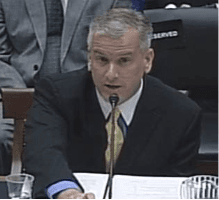 James H. Sutton, Jr., CPA, Esq. is a State and Local Tax (SALT) attorney/CPA and practices almost exclusively in the area of Florida sales and use tax controversy. James is a Shareholder at the Law Offices of Moffa, Sutton & Donnini, P.A. and has lead the criminal investigation division of the firm for 15 years. James has been a licensed Certified Public Accountant since 1994 and a member of The Florida Bar since 1998. For 20 years, Mr. Sutton has served as an Adjunct Professor of Law at Stetson University College of Law, teaching State and Local Tax, and also taught Sales and Use Tax at Boston University School of Law's LLM in Taxation program. If you have any questions, then Mr. Sutton has a FREE INITIAL CONSULTATION policy. He can be reached directly at 813-775-2131 or JamesSutton@FloridaSalesTax.com.
About the Firm
The Law Offices of Moffa, Sutton & Donnini, P.A. is a Florida law firm that practices almost exclusively in the area of Florida state and local tax (SALT) controversy, with offices in Tampa, Fort Lauderdale, and Tallahassee, representing clients throughout Miami-Dade County and the rest of Florida. Collectively, the firm's attorneys bring over 200 years of combined experience handling Florida sales tax audits, criminal investigations, protests, and litigation. Learn more at www.FloridaSalesTax.com.
Additional Resources
- Florida Sales Tax Audit Help — June 20, 2026, by James H. Sutton, Jr., CPA, Esq.
- Florida Sales Tax Criminal Investigations: When Sales Tax Experience Matters — June 2026, by James H. Sutton, Jr., CPA, Esq.
- FLORIDA SALES TAX ARREST – HOLLYWOOD USED CAR DEALER — August 24, 2026, by James H. Sutton, Jr., CPA, Esq.
- FLORIDA SALES TAX ARREST – PALM BEACH BBQ & SEAFOOD OWNER — August 23, 2026, by James H. Sutton, Jr., CPA, Esq.
- Florida Sales Tax Voluntary Disclosure: The Best Way to Clean Up a Florida Sales Tax Problem — May 26, 2026, by James H. Sutton, Jr., CPA, Esq.
© Copyright 2026. James H Sutton, Jr. All rights reserved.