
.2610091245326.png)
FILING FLORIDA SALES TAX RETURNS LATE: PENALTIES, INTEREST, AND HOW TO GET THE PENALTY WAIVED
A Late Florida Sales Tax Return Penalty MAY be forgiven, if...
By: James H. Sutton, Jr., CPA, Esq.
813-775-2131 | JamesSutton@FloridaSalesTax.com
A late Florida sales tax return, even by 1 minute, incurs a penalty of 10 percent charge with a $50 minimum, interest runs at a daily rate. However, if this is your first late return in 12 months, the Department of Revenue will usually waive the penalty if you ask. The trouble starts when one late return becomes two, then six, then a habit. At that point the automatic waiver disappears, the Department can report you to a credit bureau, warrants and bank levies follow, and failing to file six consecutive returns with intent to evade the tax is a felony. In my sales tax controversy practice, the businesses that end up in serious trouble are almost never the ones that missed a deadline once. They are the ones that stopped filing because they could not pay and hoped the problem would go away. Honestly, the biggest problem is the moving deadline of when you have to file the returns. This article explains exactly what a late return costs, corrects a common misunderstanding about how the penalty is calculated, walks through the automatic waiver rules, and lays out what to do if you are already behind.
I. The Short Answer: What Happens If You File a Florida Sales Tax Return Late?
A Florida sales tax return filed or paid after the due date triggers four consequences:
- A late penalty of 10 percent of the tax due on the return, with a $50 minimum, under Section 212.12(2)(a), Florida Statutes. The $50 minimum applies even if the return shows no tax due.
- Interest on the unpaid tax at Florida’s floating rate, which is 11 percent per year for all of 2026.
- Loss of the collection allowance, the small credit Florida gives dealers for filing and paying electronically on time.
- A "noncompliant filing event" on your record, which determines whether future penalties are waived automatically.
If you file late and pay late on the same return, you get one 10 percent penalty, not two. That point is widely misunderstood and is addressed in Part III below.
Consequence | Amount (2026) | Authority |
|---|---|---|
Late filing or late payment penalty | 10% of tax due; $50 minimum, even on a zero return | Section 212.12(2)(a), F.S. |
Interest on late tax | 11% per year; daily factor 0.000301370 | Section 213.235, F.S.; TIP 26ADM-02 |
Collection allowance | Lost (worth up to $30 per return) | Section 212.12(1), F.S. |
Penalty on tax never reported on a return | 10% per 30 days, up to 50% | Section 212.12(2)(b), F.S. |
Six consecutive unfiled returns with willful intent to evade | Third-degree felony | Section 212.12(2)(c), F.S. |
II. When Is a Florida Sales Tax Return Late?
Florida sales tax is due on the first day of the month following the reporting period and becomes delinquent on the 21st. Under Section 212.15(1), F.S., returns postmarked after the 20th are delinquent. That is true whether you file monthly, quarterly, semiannually, or annually under Section 212.11, F.S. If the 20th falls on a Saturday, Sunday, or legal holiday, a return postmarked on the PREVIOUS business day is timely. For example, the August 2026 return was not late until after Monday, September 21, 2026, because September 20 fell on a Sunday.
However – if you file electronically, which most taxpayers are required to do, then the return must be filed and paid by 5:00 PM Eastern Standard Time on the 19th of the month. But if the 19th falls on a Saturday, Sunday, or legal holiday, then the return is due by 5:00 PM EST the previous business day. The DOR’s computer system will track you even if you are 1 minute late and do NOT get caught by the time zones. 5:00 PM EST means 5:00 PM EST. No exceptions.
Zero returns must still be filed timely. A registered dealer must file a return for every reporting period, even when there were no sales. A missed zero return is a noncompliant filing event and draws the $50 minimum penalty.
III. The Late Penalty: One 10 Percent Penalty, Not Two, and Not 50 Percent
Section 212.12(2)(a), F.S., imposes a specific penalty of 10 percent of the tax shown on a return that is not timely filed, or of any tax that is not timely paid. The penalty cannot be less than $50. The statute then says something many business owners, and a fair amount of published guidance, overlook: if a dealer fails to timely file a return and fails to timely pay the tax shown on it, only one penalty of 10 percent, with the same $50 minimum, is imposed.
So, a return showing $4,000 of tax that is filed and paid two months late carries a $400 penalty, not $800, and not a penalty that keeps growing each month. The late penalty on tax you actually report is a one-time charge. Interest is what keeps running.
Where the 50 percent figure comes from. Section 212.12(2)(b), F.S., imposes a separate, escalating penalty of 10 percent for each 30 days (or fraction of 30 days), up to 50 percent in the aggregate. But that penalty applies when a dealer fails to disclose the tax on the return, which in practice means tax that was underreported or omitted and later found, usually on audit. It does not apply to a complete, accurate return that is simply filed late. That distinction matters: a late but honest return costs 10 percent, while unreported tax that the Department later finds can cost up to 50 percent. It is also one more reason to file every return, even late, rather than leaving periods unfiled.
IV. Interest: 11 Percent for 2026, Calculated Daily
Although Section 212.12(3), F.S., still refers to interest at 1 percent per month, interest on Florida sales tax due after January 1, 2000 is actually governed by the floating rate in Section 213.235, F.S., which the Department resets every January 1 and July 1. According to the Department’s Tax Information Publication 26ADM-02, the rate is 11 percent for July 1 through December 31, 2026, the same as the first half of the year, with a daily interest rate factor of 0.000301370. The rate for 2025 was 12 percent.
To calculate interest, multiply the tax due by the number of days late and by the daily factor. Count from the day after the "late after" date through the day the return and payment are postmarked or delivered, including that last day. If the period spans a rate change, each portion is calculated at its own rate.
Interest is generally not waived just because the penalty is. The Department can compromise interest only in limited situations, such as where the delay is attributable to the Department itself. Assume you will owe the interest and pay it with the return.
V. The Collection Allowance You Lose
Under Section 212.12(1), F.S., a dealer that files and pays electronically may keep 2.5 percent of the first $1,200 of tax due on each return, which works out to a maximum of $30 per return. The Department may deny the allowance when the return or the tax is delinquent. Thirty dollars sounds trivial, but for a monthly filer that misses the deadline regularly, that is up to $360 a year on top of penalties and interest, and it is the first thing to go.
VI. What a Late Return Actually Costs: A Worked Example
Assume a monthly filer owes $4,000 on its July 2026 return, which was late after Thursday, August 20, 2026. The business files and pays on Friday, October 9, 2026. Counting August 21 through October 9, the return is 50 days late.
Item | Calculation | Amount |
|---|---|---|
Tax due | $4,000.00 | |
Late penalty (one penalty, filing and payment both late) | 10% × $4,000 (greater than the $50 minimum) | $400.00 |
Interest | $4,000 × 50 days × 0.000301370 | $60.27 |
Collection allowance lost | 2.5% × $1,200 cap | $30.00 |
Total cost of filing late | $490.27 |
If the same business had no late returns in the prior 12 months, the $400 penalty should be waived automatically under the rules in Part VII, and the true cost drops to the interest and the lost allowance, about $90. If the business has a history of late returns, it pays the full amount, and the Department starts paying closer attention.
VII. Getting the Penalty Waived
A. The automatic waiver under Section 213.21(10)
For sales tax and the local tourist development and convention development taxes reported with it, Section 213.21(10), F.S., requires the Department to settle or compromise the late penalty without a written request when the dealer qualifies. The rules depend on filing frequency:
- Monthly filers qualify if they had no noncompliant filing event in the immediately preceding 12 months and no unresolved liability from one. They also qualify if they had one noncompliant filing event in that 12-month window, resolve the current one by filing the return and paying the tax and interest within 30 days after the Department’s notice, and have no unresolved liability.
- Quarterly filers qualify only if they had no noncompliant filing event in the immediately preceding 12 months and no unresolved liability.
A "noncompliant filing event" is a failure to timely file a complete and accurate return or a failure to timely pay the tax reported on it. Note that a late payment of an on-time return counts.
Two strikes changes everything. A monthly filer with two or more noncompliant filing events in the preceding 12 months is liable for the full penalties, including loss of the collection allowance, and the statute directs that the dealer be reported to a credit bureau, unless the dealer shows the noncompliance was due to "extraordinary circumstances."
Despite the requirement in the statute, most taxpayers still must request a waiver of the last filing penalty as the DOR’s computer system imposes it automatically.
B. Extraordinary circumstances
The statute defines extraordinary circumstances as events beyond the taxpayer’s control, such as the death of the taxpayer, acts of war or terrorism, natural disasters, fire, or other casualty. Importantly, it also includes the nonfeasance or misfeasance of the employees or representatives responsible for compliance, such as a bookkeeper who stopped filing returns. To rely on that ground, the business must show that its principals did not actually know about the noncompliance and that the problem was resolved within 30 days after they found out. That 30-day clock is unforgiving. If you discover that an employee or outside bookkeeper has not been filing, fix it immediately and document when you found out.
C. Reasonable cause
Outside the automatic waiver, Section 213.21(3)(a), F.S., allows the Department to compromise penalties when the noncompliance was due to reasonable cause and not willful negligence, willful neglect, or fraud. Serious illness, a natural disaster, and reliance on written advice from the Department are the classic examples. Cash-flow problems, on the other hand, almost never qualify, and "I didn’t know" is rarely enough on its own. A reasonable-cause request should be specific, documented, and filed together with the return and payment, not instead of them.
VIII. When Late Becomes Criminal
Sales tax is not like income tax. Under Section 212.15(1), F.S., the tax a dealer collects becomes state funds at the moment of collection. A business that collects sales tax and then does not remit it is, in the State’s view, holding the State’s money. That is why Florida treats chronic non-filing and non-payment of sales tax so differently from a late income tax return.
- Six consecutive returns. Under Section 212.12(2)(c), F.S., a person who knowingly and with willful intent to evade the tax fails to file six consecutive returns commits a felony of the third degree.
- False returns. Filing a return that understates the tax with willful intent to evade it carries a 100 percent penalty on the unreported tax and criminal penalties that increase with the amount involved, up to a first-degree felony for $100,000 or more, under Section 212.12(2)(d), F.S. Filing a "placeholder" return showing less than you collected just to look current is far worse than filing late.
- Collection actions. Once tax is delinquent, the Department can issue a tax warrant, record liens, and garnish bank accounts and receivables under Section 212.15, F.S., often with little warning to the business.
In my experience, the criminal cases rarely begin with a dramatic act of fraud. They begin with a business that fell behind, stopped filing to avoid showing what it owed, and let the months pile up. Filing every return, even when you cannot pay in full, is the single most important step in keeping a tax problem civil.
IX. What to Do If You Are Already Behind
- File every missing return now, even if you cannot pay. Filing stops the clock on the six-consecutive-returns problem, puts accurate numbers on the record instead of a Department estimate (which will always be high), and avoids the escalating penalty for unreported tax.
- Pay what you can, starting with the most recent periods. Interest runs only on the unpaid balance, and every payment reduces it. Section 213.21(4), F.S., authorizes the Department to enter into payment agreements for tax, interest, and penalties. You can also designate the payments to go to tax, IF there is not a tax warrant outstanding.
- Do not file zero or understated returns to look current. That turns a late-filing problem into a false-return problem.
- Respond to Department notices within the deadline stated. The monthly-filer automatic waiver for a second late event depends on resolving it within 30 days after the Department’s notice.
- Consider voluntary disclosure if you were never registered or have unreported tax. If the problem is not late returns but tax that was never reported at all, and the Department has not yet contacted you, a voluntary disclosure under Section 213.21(7), F.S., can limit the lookback to three years and resolve penalties on far better terms than an audit. Voluntary disclosure is not available once the Department has contacted you about the liability, and the three-year limit does not apply to tax that was collected but not remitted.
- Get help before, not after, a warrant or an investigator shows up. The options narrow quickly once the Department moves to collection or refers a case for investigation.
Frequently Asked Questions
Q: What is the penalty for filing a Florida sales tax return late?
A: A penalty of 10 percent of the tax due on the return, with a minimum of $50, under Section 212.12(2)(a), F.S. If you file late and pay late on the same return, only one 10 percent penalty applies.
Q: Do I owe a penalty if I file a zero return late?
A: Yes. The $50 minimum penalty applies even when the return shows no tax due, unless the penalty is waived under the automatic waiver rules in Section 213.21(10), F.S.
Q: Does the Florida late penalty grow to 50 percent?
A: Not for a complete return that is simply filed late. The escalating penalty of 10 percent per 30 days, up to 50 percent, in Section 212.12(2)(b), F.S., applies to tax that was not disclosed on a return, typically tax that was underreported or omitted and later found by the Department.
Q: What is the Florida interest rate on late sales tax in 2026?
A: 11 percent per year for all of 2026, with a daily interest rate factor of 0.000301370, according to Department of Revenue TIP 26ADM-02. The rate can change on January 1, 2027.
Q: When is a Florida sales tax return late?
A: After the 19th day of the month following the reporting period, or the previous business day if the 19th falls on a weekend or legal holiday. Electronic payments must be initiated by 5:00 p.m. Eastern time on the business day before the 19th. Recommendation – pay by the 15th to be safe!
Q: Will the Department waive my late penalty automatically?
A: The are supposed to, but do not in practice, if you qualify. Monthly filers qualify with no late events in the prior 12 months, or with one prior late event if they resolve the current one within 30 days after the Department’s notice. Quarterly filers qualify only with no late events in the prior 12 months.
Q: Can I go to jail for not filing Florida sales tax returns?
A: Yes, in serious cases. Knowingly failing to file six consecutive returns with willful intent to evade the tax is a third-degree felony under Section 212.12(2)(c), F.S., and filing false returns carries additional criminal penalties based on the amount involved.
About the Author
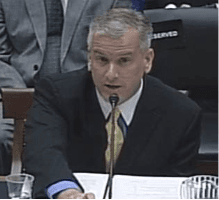 James H. Sutton, Jr., CPA, Esq. is a State and Local Tax (SALT) attorney/CPA and practices almost exclusively in the area of Florida sales and use tax controversy. James has been a licensed Certified Public Accountant since 1994 and a member of The Florida Bar since 1998. For 20 years, Mr. Sutton has served as an Adjunct Professor of Law at Stetson University College of Law, teaching State and Local Tax, and also taught Sales and Use Tax at Boston University School of Law’s LLM in Taxation program. If you have any questions, then Mr. Sutton has a FREE INITIAL CONSULTATION policy. He can be reached directly at 813-775-2131 or JamesSutton@FloridaSalesTax.com.
Additional Resources
Florida Sales Tax Guide: Repossessions and Bad Debt Credits — October 9, 2026, by James H. Sutton, Jr., CPA, Esq.
Florida Sales Tax Audit Help — June 20, 2026, by James H. Sutton, Jr., CPA, Esq.
Florida Sales Tax Criminal Investigations: When Sales Tax Experience Matters — June 2026, by James H. Sutton, Jr., CPA, Esq.
Florida Sales Tax Voluntary Disclosure: The Best Way to Clean Up a Florida Sales Tax Problem — May 26, 2026, by James H. Sutton, Jr., CPA, Esq.
Florida Sales Tax Informal Written Protest — November 17, 2018, by James H. Sutton, Jr., CPA, Esq.
© Copyright 2026. James H Sutton, Jr. All rights reserved.