

I Need Help with Florida Sales Tax Audit
What to Do the Moment the Department of Revenue Comes Calling — and the Deadlines You Cannot Afford to Miss
By: James H. Sutton, Jr., CPA, Esq.
813-775-2131 / JamesSutton@FloridaSalesTax.com / www.FloridaSalesTax.com
I have represented thousands of Florida businesses in sales and use tax audits, and the first phone call almost always starts with the same five words: "I need help with a Florida sales tax audit." That instinct is exactly right. A Florida sales tax audit is not a paperwork exercise. It is a three-year (and sometimes unlimited) review of every sale, every purchase, and every exemption your business has claimed, conducted under statutes that place the burden of proof squarely on you. This article explains how the audit process works, how far back the Department of Revenue can reach, the mistakes that turn a manageable audit into a six-figure assessment, and the protest deadlines that — once missed — cannot be recovered.
I. The Audit Notice Is Your Starting Gun
Most Florida sales tax audits begin with a Notice of Intent to Audit Books and Records (Form DR-840). A narrower "limited scope" audit begins with a Form DR-846. Either way, section 212.13(5)(a), Florida Statutes, requires the Department to send written notification at least 60 days before the auditor is scheduled to begin the audit.
Those 60 days are the most valuable period in the entire audit. This is when you gather your records, identify your exposure before the auditor does, collect missing exemption certificates from customers, and retain representation before the auditor forms a first impression of your business. The worst thing you can do is presume everything should be good and just wing it. Everything said in that opening conversation becomes part of the audit file, and most business owners say and give far more than they should.
II. How Far Back Can the Department of Revenue Go?
The general statute of limitations appears in section 95.091(3)(a)1., Florida Statutes. The Department may assess tax within three years after the later of the date the tax is due, the date the return is due, or the date the return is filed. Because each monthly return has its own limitations period, a standard audit covers 36 separate monthly periods.
Issuing the audit notice extends that window. Under section 213.345, Florida Statutes, the limitations period is tolled for one year once the Department issues a notice of intent to audit — provided the Department actually begins the audit within 120 days, unless the taxpayer requests a delay. Auditors also routinely ask taxpayers to sign a Form DR-872 extending the statute of limitations. Sometimes signing is the right strategic decision, and sometimes it is not. Never sign one without understanding exactly what you are giving up.
Three years is not always the limit. Under section 95.091(3)(a)5., the Department may assess at any time if the taxpayer failed to file a required return, failed to make a required payment, or filed a fraudulent return. A business that should have been registered to collect Florida sales tax and never was can face a lookback that reaches all the way back to the day the obligation first arose.
III. What the Auditor Will Actually Examine
Sales. The auditor compares the gross sales reported on your sales tax returns to your federal income tax returns, bank deposits, and credit card processor reports. Every unexplained difference is presumed to be a taxable sale until you prove otherwise. You should probably know that the auditor most likely already has your credit card sales by month for most of the audit period.
Exempt sales. Every sale for resale must be supported by a valid Annual Resale Certificate under Rule 12A-1.039, F.A.C., and every exempt sale to a nonprofit, government, or other exempt purchaser must be supported by the proper certificate AND you must have proof the payment came directly from the nonprofit under Rule 12A-1.038, F.A.C.. Under section 212.13(5)(c), only documentation that is available to the auditor when the audit begins is deemed acceptable, although a resale certificate dated before the audit commences is acceptable for past transactions. That is precisely why the 60-day notice period is the time to chase down missing certificates.
Purchases and use tax. The auditor will review your fixed asset purchases and expense accounts — supplies, equipment, software, repairs, and anything bought from an out-of-state vendor that did not charge Florida tax. Those items are subject to use tax under Rule 12A-1.091, F.A.C. if tax was not paid at the time of purchase. For many service businesses, the use tax portion of the audit is larger than the sales portion.
Commercial rent. Florida repealed its sales tax on commercial real property rentals effective October 1, 2025. However, audit periods that reach back before that date still include rent paid or received during those earlier months, so commercial leases remain part of most audits currently underway.
IV. The Mistakes That Turn a Manageable Audit Into a Disaster
Handing over everything. The auditor will ask for broad access to your records and will often request an electronic copy of your accounting system. Do not simply export your entire QuickBooks file. Provide the records that are requested, organized and reviewed in advance, so that the auditor sees what the law requires you to produce — not every stray journal entry that invites a new line of questioning.
Not providing records at all. The opposite mistake is worse. Under section 212.12(5)(b), Florida Statutes, if a dealer fails or refuses to make records available, the Department must make an assessment from an estimate based on the best information available to it. That estimate is considered prima facie correct, and the burden to prove otherwise rests entirely on the dealer. Estimated assessments are almost always higher than what a business actually owes.
Agreeing to a sampling method you do not understand. When records are adequate but voluminous, section 212.12(6)(c) allows the Department to sample them and project the results over the entire audit period. The Department must first make a good faith effort to reach an agreement with the dealer on the sampling method, and if no agreement is reached, the can move forward with a sample, but the taxpayer retains the right to challenge the sample method. That can be a very valuable right. A single unusual month or transaction pulled into the sample can be multiplied across all 36 months, so the sampling agreement deserves careful scrutiny before anyone signs it. I usually recommend my clients not sign the sample agreement unless they know ahead of time that the sample is unusually favorable.
Signing the DR-1215 without review. When fieldwork ends, the auditor issues a Notice of Intent to Make Audit Changes (Form DR-1215) with the proposed schedules. You generally have 30 days to dispute the findings and request a conference with the audit supervisor. Never sign the DR-1215 agreeing to the changes until someone who understands Florida sales tax has reviewed every schedule line by line. This is often the least expensive point in the entire process to eliminate errors. By the way, I will caution you to be sitting down when you get the DR-1215 Notice of Intent to Make Audit changes. The numbers are usually much larger than they should be and have penalties and interest added.
Talking your way into a criminal case. Under section 212.15, Florida Statutes, sales tax you collect from customers is state money the moment you collect it. If your business collected sales tax and did not remit all of it, the civil audit can become the evidence for a criminal prosecution. I have seen business owners arrested after defending an inflated civil audit estimate by proving what they "really" collected — because the records that reduced the assessment also proved the collected but unremitted tax. If there is any chance collected tax was not fully remitted, stop and speak with an attorney before you speak with the auditor.
V. After the Audit: Protest Rights and Hard Deadlines
After the DR-1215 stage, the Department issues a Notice of Proposed Assessment ("NOPA"). Under Rule 12-6.003, F.A.C., you secure review of the NOPA by filing a written protest postmarked or faxed within 60 consecutive calendar days from the date of issuance on the notice. A request for a 30-day extension must also be made within that 60-day window. If you miss it, the proposed assessment becomes final.
You do not have to pay anything to the DOR to file a protest while preserving every option to challenge at a higher level, and the protest resolves a surprising number of cases. The Department has discretion at this stage, and a well-prepared protest often surfaces issues the auditor missed entirely.
Once the assessment is final, section 72.011, Florida Statutes, gives you another 60 days to challenge it either by filing a petition under chapter 120 (an administrative proceeding that can proceed to the Division of Administrative Hearings) or by filing an action in circuit court. You must choose one. A circuit court action requires you to pay the uncontested portion and either deposit the contested amount into the court registry or post a bond, unless the requirement is waived. These requirements are jurisdictional — a missed deadline ends the challenge. For this reason, most people chose a Chapter 120 petition to challenge the assessment because you only have to be in the amount you are not contesting. For big tax assessments that you don’t agree with, the lower payment can be a life saver.
Penalties are negotiable. Under section 212.12(2)(b), failing to disclose tax on a return carries a penalty of 10 percent for each 30 days the failure continues, up to 50 percent of the unpaid tax. However, section 212.12(4) authorizes the Department to settle or compromise penalties and interest under section 213.21, Florida Statutes, and a documented reasonable-cause request frequently results in substantial penalty relief.
VI. Why the Type of Help You Hire Matters
A Florida sales tax audit is governed by chapter 212, the Department of Revenue's own rules, and procedures that have almost nothing in common with an IRS income tax examination. A general practice CPA may know your books well but not the protest rules. An IRS tax attorney may know federal procedure but not Florida's resale certificate requirements, sampling rules, or estimation statute. And a former prosecutor may understand criminal court but not how a sales tax audit is built.
You want representation that understands the accounting, the law, and the Department itself. Attorney-client privilege also matters: communications with your attorney are protected in a way that communications with an unrepresented bookkeeper are not — a distinction that becomes critical if the audit reveals collected-but-unremitted tax.
VII. What to Do This Week If You Just Received an Audit Notice
Calendar the dates. Write down the date on the DR-840 or DR-846, the date 60 days later, and the date 120 days later. Every later deadline in the audit builds on these.
Pull your returns and reconcile them. Compare the gross sales on your sales tax returns for the audit period to your federal income tax returns and bank deposits. If the numbers do not tie, you want to know why before the auditor asks. Also look at your 1099’s from your credit card company to confirm the 12 months of credit card sales do not create a mismatch with the amounts you put on your sales tax returns.
Gather your certificates. Collect every Annual Resale Certificate and exemption certificate for your exempt sales. Where certificates are missing, request them from your customers now, while the documentation can still be dated before the audit begins.
Review your purchases. Look at your fixed asset register and expense accounts for items purchased without Florida tax. Knowing your use tax exposure in advance allows you to address it on your own terms rather than the auditor's.
Do not call the auditor yet. Rescheduling, scope, and records requests can all be handled through your representative once a power of attorney is filed. The first substantive conversation with the Department should happen after you know what your records show — not before.
Frequently Asked Questions
How long does a Florida sales tax audit take?
It depends on the size of the business and the condition of the records. Smaller audits can move from the DR-840 notice to a NOPA in several months; larger audits with sampling disputes can take more than a year. The 60-day protest window begins only when the NOPA is issued.
Can I handle a Florida sales tax audit myself?
You can, but the Department's auditors do this every day and most business owners do it once. The most expensive mistakes — overproducing records, accepting a bad sample, signing the DR-1215, or missing the protest deadline — are all made by taxpayers acting without experienced representation.
What if I cannot find all of my records?
Reconstruct what you can from bank statements, vendor invoices, merchant processor reports, and customer certificates. Partial records are almost always better than none, because a complete lack of records allows the Department to estimate under section 212.12(5)(b), and that estimate is presumed correct. But you are not required to create records that do not exist. An auditor may ask for financial statements, but if you don’t normally have financial statements, then you are not required to provide them.
Will the Department reduce penalties?
Often, yes. The Department has authority to compromise penalties and interest under section 213.21, Florida Statutes, and reasonable-cause arguments are routinely raised during the audit conference and the informal protest.
Will the Department reduce interest?
Usually know until you get to the Chapter 120 petition stage, then interest compromise is often available.
What happens if I miss the 60-day protest deadline?
The proposed assessment becomes final, and your only remaining avenue to contest it is a chapter 120 petition or a circuit court action filed within the 60-day period under section 72.011. After that, your options narrow dramatically. Do not let the date on the NOPA pass unnoticed.
About the Author
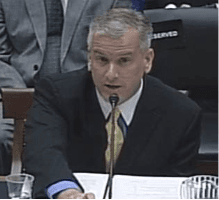 James H. Sutton, Jr., CPA, Esq. is a State and Local Tax (SALT) attorney/CPA and practices almost exclusively in the area of Florida sales and use tax controversy. James is a Shareholder at the Law Offices of Moffa, Sutton & Donnini, P.A. and has been a licensed Certified Public Accountant since 1994 and a member of The Florida Bar since 1998. For 20 years, Mr. Sutton has served as an Adjunct Professor of Law at Stetson University College of Law, teaching State and Local Tax, and also taught Sales and Use Tax at Boston University School of Law's LLM in Taxation program. If you have any questions, then Mr. Sutton has a FREE INITIAL CONSULTATION policy. He can be reached directly at 813-775-2131 or JamesSutton@FloridaSalesTax.com.
Additional Resources
The Two Tracks for Challenging a Florida Tax Assessment — September 16, 2026, by Law Offices of Moffa, Sutton & Donnini, P.A.
Florida Sales Tax Criminal Investigations: When Sales Tax Experience Matters — June 24, 2026, by James H. Sutton, Jr., CPA, Esq.
Florida Sales Tax Audit Help — June 20, 2026, by James H. Sutton, Jr., CPA, Esq.
Florida Sales Tax Voluntary Disclosure: The Best Way to Clean Up a Florida Sales Tax Problem — May 26, 2026, by James H. Sutton, Jr., CPA, Esq.
Florida Sales Tax Informal Written Protest — November 17, 2018, by James H. Sutton, Jr., CPA, Esq.
WATCH DAVID BRENNAN'S VIDEO ON THE FLORIDA SALES TAX DR-840'S AND DR-846S
© Copyright 2026. James H Sutton, Jr. All rights reserved.