

For 2026, the Florida legislature has been way behind the eightball in getting tax legislation passed this year. Finally, on May 29th, the legislature sent House Bill 7031E to the Governor Desantis' desk for signature or line-item veto. There are a lot of details in this tax package that will impact a lot of industries, tax professionals, homeowners, and even sports franchises. Any potential changes to Florida's property homestead exemption are still in the works and will be covered by another article. In the meantime, each statute that is being amended in the 2026 tax package is listed below with short summary of the changes. There is a link to the text of the entire bill at the bottom of this article.
§ 163.387, F.S. — Redevelopment Trust Fund Adds special districts created pursuant to § 125.901 (children's services councils) to the list of taxing authorities exempt from the requirement to contribute ad valorem tax revenues to community redevelopment agency trust funds. This protects dedicated children's services funding from diversion through tax increment financing mechanisms. The amendment is incorporated by reenacting § 259.042(9), F.S., which cross-references the same exemption list for conservation land TIF purposes.
§ 192.091, F.S. — Commissions of Property Appraisers and Tax Collectors Restructures the commission framework for tax collectors on school millage collections by authorizing — but not requiring — a tax collector to waive the commission otherwise due on voted school millages (§ 200.001(3)(c) and (e)). The waiver must be communicated in writing to the board of county commissioners by March 1 prior to the fiscal year it takes effect, and any rescission must likewise be communicated in writing by March 1. For calendar year 2026 only, the waiver deadline is extended to September 1, 2026, with that transitional provision automatically repealing January 1, 2027.
§ 193.155, F.S. — Homestead Assessments / Save Our Homes Portability Conforms the statutory portability provisions to the State Constitution by amending the formulas in subsections (8)(a) and (8)(b) to reference the "immediate prior homestead" consistently when calculating the portable Save Our Homes benefit. The amendment aligns the statute with the constitutional three-year lookback window under Art. VII, § 4(d)(8), and first applies to the 2027 ad valorem tax roll.
§ 193.461, F.S. — Agricultural Lands; Classification and Assessment Expands the statutory definition of "agricultural purposes" to include compost, as defined in § 576.011, F.S., derived entirely from agricultural activity and regulated under § 403.7043, F.S. This allows composting operations that are purely agricultural in origin and subject to the agricultural waste composting statute to qualify for agricultural classification and the preferential assessment that accompanies it. The amendment first applies to the 2027 property tax roll.
§ 193.4616, F.S. (NEW) — Agricultural Lands Used for Packaging of Fruits and Vegetables Creates a new statutory section providing that packinghouses — defined as buildings on or contiguous with agriculturally classified land used to pack or prepare fruits or vegetables harvested from land owned by the same owner — shall be considered part of the average agricultural yield per acre for income methodology assessment purposes and shall have no separately assessable contributory value. Common ownership may be held directly or through wholly owned related entities. In years where no agricultural assessment application is filed, the property reverts to assessment under § 193.011. Applies beginning with the 2027 tax roll.
§ 193.626, F.S. (NEW) — Assessment of Mobile Home Parks Creates a new 3% annual assessment increase cap for mobile home parks where, as of January 1 of the taxable year, at least 75% of lots are subject to written rental agreements of one year or more and the ad valorem taxes are contractually required to be passed through proportionately to mobile home owners under § 723.031(5)(c). The cap begins January 1, 2027, and assessed value may not exceed just value. If a park loses eligibility, it transitions to the standard § 193.1555 non-homestead assessment cap using the most recent capped value as the base, and may not revert to just value unless a qualifying improvement or change of ownership occurs. Annual applications must be filed with the property appraiser by March 1 under oath. The Department of Revenue is authorized to adopt emergency rules through June 30, 2028. Applies beginning with the 2027 ad valorem tax roll.
§ 194.032, F.S. — Value Adjustment Board; Hearing Purposes Effective January 1, 2027, adds a new purpose for which value adjustment boards are required to meet: hearing appeals relating to the timely filing of tax returns as required by § 194.034(1)(j). This expands the VAB's subject matter jurisdiction to cover tax return filing timeliness disputes in addition to its existing assessment, exemption, deferral, classification, and change-of-ownership jurisdiction.
§ 195.087, F.S. — Property Appraisers and Tax Collectors; Budget Posting Requirements Amends the online budget posting requirement to clarify that each property appraiser and tax collector must post their final approved budget, including all supporting schedules, on their own official website within 30 days after adoption, and that each county's official website must contain a link to those postings. If the official has no website, the budget must be posted on the county's website. The amendment removes prior language and replaces it with this clearer affirmative obligation.
§ 196.011, F.S. — Annual Application Required for Exemption Amends the exemption renewal and denial process to require that if additional information is obtained by the property appraiser after July 1, any notice of disapproval must be served upon the applicant on or before the mailing of the TRIM notice under § 200.069, rather than being served after TRIM mailing. This ensures property owners have a meaningful opportunity to challenge late-discovered denials through the VAB process before tax bills issue. Applies to the 2026 ad valorem tax roll.
§ 196.015, F.S. — Permanent Residency; Factual Determination by Property Appraiser Restructures the section by converting the existing numbered list of permanent residency factors into lettered paragraphs and adds a new subsection (2) establishing that two categories of government-directed absences are sufficient to maintain permanent Florida residence: (a) valid military transfer orders for Armed Forces members and their spouses, and (b) U.S. Government documentation directing diplomatic, intelligence, consular, or foreign service officers to reside, be stationed, or be deployed outside Florida. Operates retroactively to January 1, 2026, and applies to the 2026 ad valorem tax roll.
§ 196.061, F.S. — Rental of Homestead to Constitute Abandonment Adds a second exemption from the homestead abandonment-by-rental rule, applicable to full-time U.S. Government diplomatic, intelligence, consular, or foreign service officers who are directed to reside or required to be stationed or deployed outside Florida as a result of their government appointment or employment. This parallels the existing exemption for military personnel and prevents such federal officers from losing their Florida homestead exemption while renting their Florida property during an overseas posting. Operates retroactively to January 1, 2026, and applies to the 2026 ad valorem tax roll.
§ 196.151, F.S. — Homestead Exemptions; Approval, Refusal, Hearings Parallel to the amendment to § 196.011, this section is amended to require that if additional information is obtained by the property appraiser after July 1, any notice of disapproval of a homestead exemption application must be served upon the applicant on or before the mailing of the TRIM notice under § 200.069, rather than after TRIM mailing. No substantive change is made to the VAB appeal process or circuit court review rights.
§ 196.173, F.S. — Exemption for Deployed Servicemembers Renames Operation Atlantic Resolve to "Operation Atlantic Resolve/Atlantic Sentry" and adds five new qualifying military operations to the deployed servicemember ad valorem tax exemption: Operations in Israel and Gaza Strip's Mediterranean Territorial Seas and Air Spaces (began March 2023); Operations in support of Pacific Deterrence Initiative (began 2021); Operation Southern Spear (began 2025); Operation Sharp Sentry (began 2010); and Operations by the Multinational Force and Observers (began 1981). For the 2026 tax roll only, a special transitional provision allows servicemembers to aggregate qualifying deployment days from 2023, 2024, and 2025 for purposes of calculating the exemption, with an extended application deadline of August 1, 2026, and provision for refunds of 2024 and 2025 taxes for servicemembers who accumulated more than 365 qualifying days over the three-year window.
§ 196.193, F.S. — Exemption Applications; Review by Property Appraiser Parallel to the amendments to §§ 196.011 and 196.151, adds a requirement that if additional information is obtained after July 1 regarding a claimed full or partial exemption under this section, any notice of disapproval must be served upon the applicant on or before the mailing of the TRIM notice under § 200.069. Applies to the 2026 ad valorem tax roll.
§ 200.065, F.S. — Method of Fixing Millage Adds a new subparagraph 3 to subsection (5)(a) providing that any millage rate for a dependent special district or municipal service taxing unit that levied no millage in the prior year must be adopted by unanimous vote of the governing body's full membership (or three-fourths vote if the body has nine or more members) or by referendum. This ensures that newly levying entities cannot impose taxes in their first year by simple majority, aligning the threshold with the supermajority requirement for exceeding 110% of the rolled-back rate. The amendment is declared remedial and clarifying in nature.
§ 201.15, F.S. — Distribution of Documentary Stamp Taxes Makes two significant changes to the distribution formula. First, it increases the cap on documentary stamp tax revenues allocated to the State Transportation Trust Fund from $360.08 million to $395.28 million per fiscal year, and restructures the internal allocation percentages: Small County Outreach Program drops from 16.902% to 13%; Strategic Intermodal System increases from 71.054% to 78%; Transportation Regional Incentive Program increases from 8.1985% to 9%; and the Small County Road Assistance Program's existing 3.8455% allocation is eliminated from this subsection (addressed separately in § 339.2816). Second, two new distribution paragraphs are added: (i) $60 million per fiscal year to the Water Protection and Sustainability Program Trust Fund for the C-51 Reservoir Project; and (j) $60 million per fiscal year to the State Transportation Trust Fund for the Florida Rail Enterprise.
§ 212.04, F.S. — Admissions Tax Adds two new exemptions from the admissions tax. First, admissions to any Association of Tennis Professionals' ATP Masters 1000 tournament or Women's Tennis Association's WTA 1000 tournament are exempt, with this exemption expiring July 1, 2029. Second, entry fees for participation in freshwater fishing tournaments are exempt on a permanent basis. No other changes are made to the existing exemption structure.
§ 212.08, F.S. — Sales Tax; Specified Exemptions several amendments including the first two that essentially allow state universities to be able to apply for refunds of sales tax paid by construction contractors who performed real property improvements for the university:
§ 212.08(6)(a): Amended to carve out state universities and Florida College System institutions that elect to use the new refund procedures under paragraph (e), clarifying that the general direct-payment governmental exemption does not apply when the institution instead uses the contractor/public works refund pathway.
§ 212.08(6)(e) (NEW): Creates a new sales tax exemption — delivered exclusively as a refund — for tangible personal property sold to contractors employed by or as agents of state universities or Florida College System institutions, when such property is incorporated into a public works project owned by the institution. The exemption inures to the institution upon installation, with refunds issued within 30 days of Department approval. Quarterly applications are required with specified supporting documentation, submitted under oath with the institution acknowledging liability for any tax later determined owed.
§ 212.08(7)(bbbb): Expands the existing permanent portable gas can exemption to include propane tanks with a capacity of 20 lbs. or less, correcting a drafting gap from the 2025 legislation that made the disaster preparedness exemption permanent.
§ 212.08(20): Shifts the dates of the permanent annual back-to-school sales tax holiday from "during the month of August" to the fixed period of July 20 through August 20 each year.
§ 212.08(21) (NEW): Creates a new home hardening products sales tax exemption — delivered as a refund — for impact-resistant doors, garage doors, and windows installed on eligible residential properties (site-built homestead-exempt dwellings with a just value of $700,000 or less). The exemption is capped at $500 per property per owner for purchases made July 1, 2026 through June 30, 2029. Applications must be filed between July 1, 2026 and September 30, 2029, submitted under penalty of perjury with receipts. The Department must act within 30 business days of receipt and issue refunds within 30 business days of approval. The subsection is repealed June 30, 2030.
§ 212.1832, F.S. — Credit for Contributions to Eligible Nonprofit Scholarship-Funding Organizations; Definition of "Motor Vehicle" Amends the definition of "motor vehicle" for purposes of the scholarship-funding organization sales tax donation credit program to include heavy trucks with a net vehicle weight of less than 8,000 pounds. Prior law excluded all heavy trucks; this change allows purchasers of trucks in the 5,000–7,999 pound range to direct a portion of their sales tax to qualifying scholarship organizations.
 § 213.255, F.S. — Interest on Tax Refunds As previously summarized in detail: replaces the completeness-triggered 90-day interest clock with an objective filing-date clock (interest begins on the 91st day after postmark or electronic submission); expressly authorizes the Department to deny applications lacking sufficient information after additional information is requested; adds a new subsection (5) providing that interest on a denied-then-challenged claim begins accruing 91 days after additional substantiating information is provided during appeal; strengthens the mutual-audit-agreement tolling rule from permissive to mandatory; renumbers existing subsections (5) through (9) as (6) through (10); and requires all approval/denial notices to state the interest amount and accrual commencement date. Applies to refund claims filed on or after January 1, 2027.
§ 259.042(9), F.S. — Tax Increment Financing for Conservation Lands Reenacted without substantive change solely to incorporate the amendment to § 163.387(2)(c) adding children's services councils to the TIF exemption list, ensuring the cross-reference in this section reflects the updated exemption.
§ 339.2816, F.S. — Small County Road Assistance Program Replaces the prior discretionary "up to $25 million" annual funding authorization with a mandatory minimum funding requirement of at least $40.2 million annually from the State Transportation Trust Fund beginning in fiscal year 2026-2027, including revenues distributed pursuant to § 201.15. The change from "may" to "must" and the increase in the floor amount significantly strengthens the program's funding guarantee for small counties.
§ 339.2818, F.S. — Small County Outreach Program Deletes the provision stating that funds allocated under the Small County Outreach Program are in addition to funds provided under the Small County Road Assistance Program, thereby eliminating the prior additionality language. Renumbers the remaining subsections accordingly and updates internal cross-references to reflect the renumbering. The sources of funds enumerated for the program are expanded to include ss. 215.211, 320.072, and 339.0801 in addition to § 201.15.
§ 402.261, F.S. — Child Care Tax Credits Extends the $5 million annual maximum tax credit cap through fiscal year 2027-2028 (adding two additional fiscal years beyond the prior cap period of 2025-2026 and 2026-2027). Expressly prohibits approval of tax credits under this section for any fiscal year beginning on or after July 1, 2028, establishing a firm program sunset.
§ 402.62, F.S. — Strong Families Tax Credit Makes three changes. First, increases the tax credit cap amount to $53.1 million for fiscal years 2026-2027 and 2027-2028, reverting to $40 million annually thereafter. Second, adds new per-taxpayer and per-organization caps effective January 1, 2027: a single taxpayer may not apply for credits exceeding $2 million per eligible charitable organization per fiscal year, and the total credits allocable to any single charitable organization may not exceed $10 million per fiscal year. Third, makes conforming redesignation of existing paragraphs and updates internal cross-references throughout the section.
§ 551.106, F.S. — Slot Machine License Fee and Tax Rate Two amendments: (1) exempts from the annual slot machine license fee, beginning July 1, 2026, any permitholder that held a valid slot license as of January 1, 2026, is prohibited by the Florida Constitution from conducting live racing, and is located in a county where the Seminole Tribe of Florida operates at least two casinos; and (2) reduces the tax rate on slot machine revenues from 35% to 34% at each licensed facility. The minimum aggregate tax guarantee provision (triggered if aggregate revenues fall below the 2008-2009 baseline) remains unchanged.
§ 624.509, F.S. — Insurance Premium Tax; Order of Credits Amends the prescribed order of credits against insurance premium tax liability to insert the credit allowed under § 624.51059 into the ordering sequence, placing it after the credits under §§ 624.51055 through 624.5107 and before the § 288.062 credit. This is a conforming amendment to incorporate a previously enacted credit into the statutory priority ordering. Applies to taxable years beginning on or after January 1, 2027.
§ 689.261, F.S. — Sale of Residential Property; Disclosure of Ad Valorem Taxes Adds a new subsection (3) creating a comprehensive framework requiring online real property listing platforms to display estimated ad valorem taxes for listed residential properties beginning February 1, 2027. "Listing platform" is defined to include websites, web applications, and mobile apps used for residential real property listings, excluding social media platforms. Estimated taxes must be calculated using either DOR-developed millage formulas or countywide aggregate average millage rates — in either case, the current owner's actual taxes may not be used. Printed listing materials may not include the current owner's taxes after February 1, 2027. No liability attaches for inaccurate estimates. The Department of Revenue must publish the formula and millage data annually beginning December 15, 2026, and may adopt implementing rules.
§ 849.086, F.S. — Cardrooms; Tax Rate Reduces the state tax on cardroom operators' monthly gross receipts from 8% to 5%, a permanent rate reduction of 37.5%. No other changes are made to the cardroom authorization or regulatory framework.
§ 1011.73, F.S. — District Millage Elections Amends subsections (1), (2), and (4) to replace the word "levy" with "approve" in describing the action taken by electors in school district millage referenda in subsections (1) and (2), clarifying that voters approve the millage which the school board then levies. In subsection (4), removes the requirement that the ballot question be placed on the next general election held more than 90 days after the board's resolution, allowing the school board greater flexibility in timing such elections.
Ch. 2024-158, Laws of Florida, § 21 — Documentary Stamp Tax Exemption for Alarm System Contractor Obligations Extends by one year — from June 30, 2027 to June 30, 2028 — the sunset date for the documentary stamp tax exemption for non-interest-bearing written obligations of $3,500 or less given by customers to alarm system contractors in connection with alarm system sales, subject to legislative reenactment review.
 Section 43 (Non-Codified) — Hunting, Fishing, and Camping Sales Tax Holiday Creates a temporary sales tax holiday from September 1 through December 31, 2026, exempting from the chapter 212 sales tax the retail sale of: ammunition; firearms (pistols, rifles, shotguns); an enumerated list of 17 firearm accessories; bows and crossbows (with statutory definitions); seven categories of bow and crossbow accessories; camping supplies (tents ≤$200; sleeping bags, hammocks, stoves, chairs ≤$50; lanterns and flashlights ≤$30); and fishing supplies (rods/reels ≤$75 individually or ≤$150 as a set; tackle boxes ≤$30; bait/tackle ≤$10 individually or ≤$20 in multiples). Commercial fishing supplies are expressly excluded. The Department of Revenue is authorized to adopt emergency rules to implement the holiday.
This summary is based on the enrolled engrossed text of HB 7031E, Engrossed 1, as passed by the Florida House of Representatives on May 29, 2026. It is intended as a legal reference tool and is not a substitute for review of the enrolled bill text or subsequently enacted law.
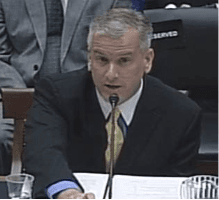 ABOUT THE AUTHOR: James H. Sutton, Jr., CPA, Esq. is a shareholder at the Law Offices of Moffa, Sutton & Donnini, P.A., one of Florida's preeminent state and local tax law firms, with offices in Fort Lauderdale, Tampa, and Tallahassee. Mr. Sutton holds dual credentials as a Certified Public Accountant and a Florida-licensed attorney, and his practice is devoted exclusively to Florida sales and use tax controversy — representing businesses from the initial audit notice through protest, litigation, and criminal defense before the Florida Department of Revenue. Mr. Sutton has been the State and Local Tax Chairman for the FICPA State Tax Committee, the AAA-CPA State and Local Tax Committee, and Florida TaxWatch’s State Tax Council. Mr. Sutton speaks often on the topic of Florida sales and use tax to CPAs, attorneys, enrolled agents, and law school students, and is a prolific contributor to the Florida Tax Law Blog at FloridaSalesTax.com. He can be reached at 813-775-2131 JamesSutton@FloridaSalesTax.com or through the contact form at www.FloridaSalesTax.com.
AUTHORITY
House Bill 7031E, Engrossed May 29, 2026, waiting for governor’s signature (or line item veto)
ADDITIONAL RESOURCES
FLORIDA – FINALLY – CHANGES TO RULES ON INTEREST ON REFUNDS!, published June 2, 2026, by James H Sutton, Jr., CPA, Esq.
HOW TO PROTEST A FL SALES TAX ASSESSMENT, published May 31, 2026, by James H Sutton, Jr, CPA, Esq.
FLORIDA SALES TAX VOLUNTARY DISCLOSURE: THE BEST WAY TO CLEAN UP A FLORIDA SALES TAX PROBLEM, published May, 26, 2026, by James H Sutton, Jr., CPA, Esq.
FLORIDA SALES TAX ON LABOR, published May 13, 2026, by James Sutton, Jr., CPA, Esq.
FL SALES TAX – RESTAURANTS; WHAT EVERY OWNER NEEDS TO KNOW BEFORE THE DOR KNOCKS, published April 23, 2026, by James H Sutton, Jr, CPA, Esq.
FLORIDA SALES TAX ARREST – PALM BEACH PIZZERIA OWNER, published March 4, 2026, by James H Sutton, Jr., CPA, Esq.
(c) copyright 2026, James H Sutton, Jr., CPA, Esq.